
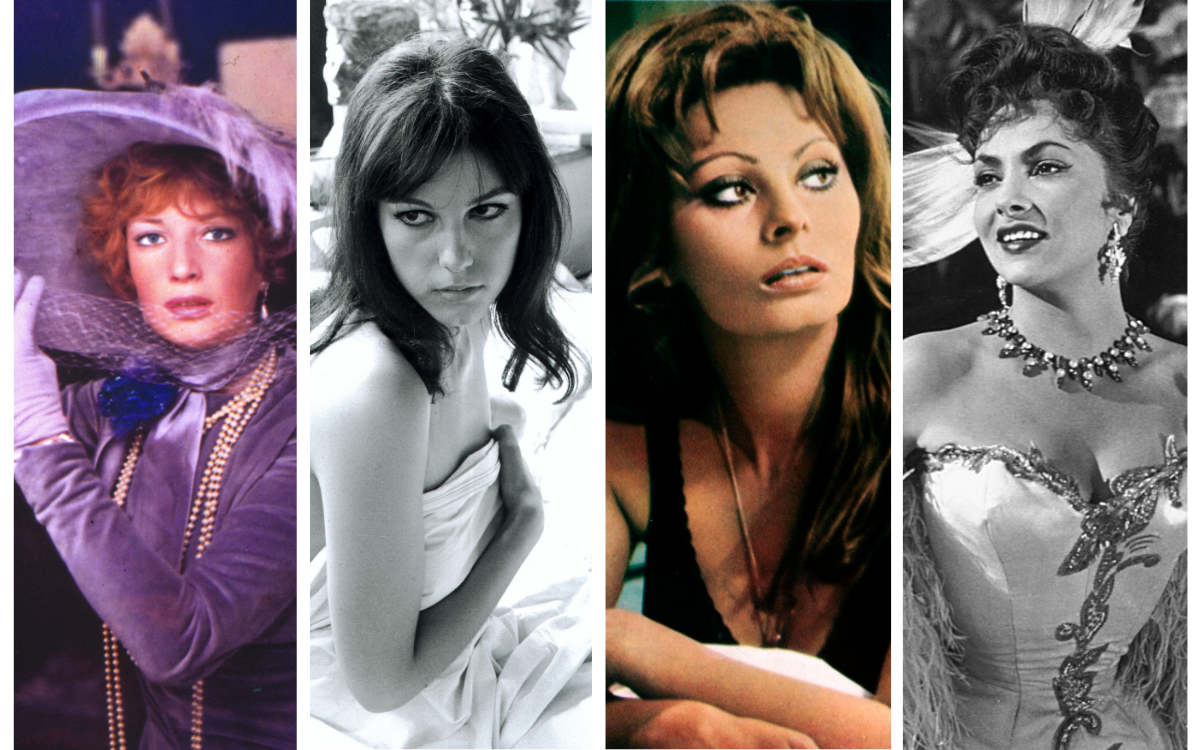
There is something both deliberate and inevitably arbitrary about gathering, under a title such as The Women of Italian Cinema, a constellation of actresses who did more than simply play roles: they transformed the very notion of femininity on screen. This is not merely a collection of artistic biographies. It is as if, through these figures, cinema had sought to pursue, and at times to anticipate, a deeper transformation in how women perceived and presented themselves.
The focus falls on actresses who emerged between the 1950s and the 1960s, marking a shift that was not only chronological but almost geological: a genuine rupture. On one side stood the world of silent-film divas and the rigid female archetypes of Fascist-era cinema; on the other, a new generation arrived, often without pedigree or academic training, but with a presence that asked no one's permission. Between the two, like a seismic event, lay Italian Neorealism.
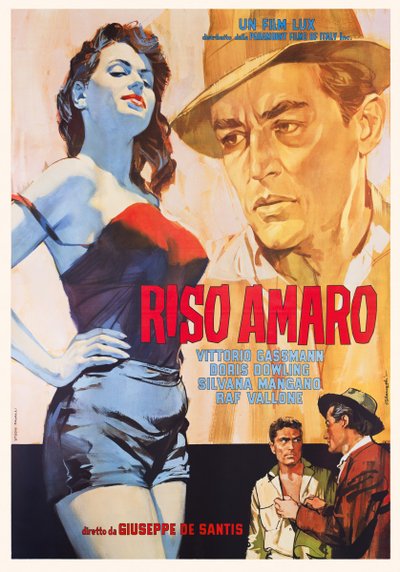
Neorealism and the Changing Female Gaze
From the mid 1940s into the early 1950s this was never simply an aesthetic choice: it was a demand for truth. Directors wanted bodies, voices, and places exactly as they were, without embellishment, a subtraction that became a revelation. New kinds of performers were needed for this: no longer polished actresses, but raw, lived-in presences. Figures like Anna Magnani or Aldo Fabrizi, who came out of variety theatre, or young newcomers with no track record at all, proved capable of bringing something to the screen that felt like unmediated truth.
Yet perhaps the most radical change was taking place elsewhere, off-set. The war had already upended the old order: with men away at the front, women had taken up space, assumed responsibility, and tasted a still-tentative form of autonomy. In the 1950s none of this had yet entered the collective consciousness; there was no shared space where women could recognise themselves in one another, television had not yet become a mass presence in Italian homes. And yet a profound transformation was already under way, almost in secret.
Cinema became one of the few tools of exchange available: an imperfect but shared mirror. In darkened cinemas, both a refuge and a public space, women watched other women. Their clothes, their make-up, their gestures, even their silences, all of it was studied, imitated, reinvented. Magazines and photo novels extended that experience further still, turning actresses into living, accessible, almost domestic role models.
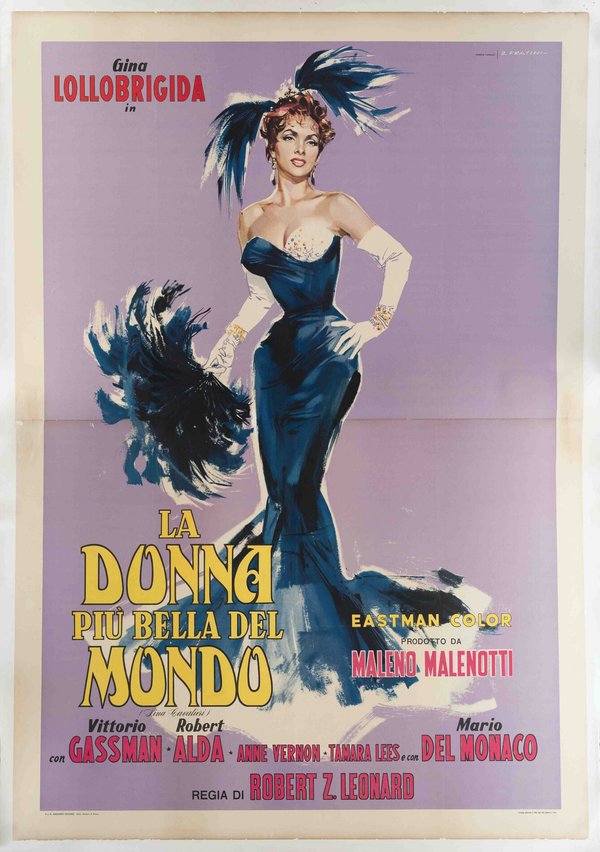
Beauty, Independence and New Icons of Italian Cinema
In the 1950s, the relationship between cinema and female beauty grew far closer, but it also changed in character. Beauty was no longer merely an adornment or a fixed trait; it became a form of expression in its own right. Many of these actresses had indeed come up through beauty pageants, but that visible, self-aware beauty no longer automatically signalled subordination. On the contrary, it could become a form of affirmation, even of transgression. Far from remaining a passive object, the female body began to tell its own story.
This is where the tide turned. For decades, cinema had imposed a set of unspoken rules on its actresses: they had to be desirable, certainly, but only within strict limits; they had to serve the leading man; they had to embody types rather than individuals. From the 1950s onward, slowly but unmistakably, that pattern began to crack. A new generation of actresses, shaped by a changing era, brought a less predictable, more contradictory, and more autonomous femininity to the screen.
It is in this spirit that the collection brings together the faces of Marisa Allasio, Claudia Cardinale, Gina Lollobrigida, Sophia Loren, Silvana Mangano, Stefania Sandrelli, Catherine Spaak and Monica Vitti, not as a simple succession of careers, but as variations on a single theme: a female identity in motion.
Each entry, each film, each brief synopsis is little more than a pretext, almost a springboard, for observing that transformation. In the end, what matters is not so much the stories the films tell, but what they reveal: the gradual emergence of a new image of women, still uncertain, still contradictory, but by now impossible to trace back to the old order.
The works reproduced on this page come from the original prints of the period, recovered, photographed and digitally restored by Movie.it.