The Art of Renato Casaro, the Last Master of Cult Movie Posters
By Paolo Zelati, Editorial Director
August 20, 2026
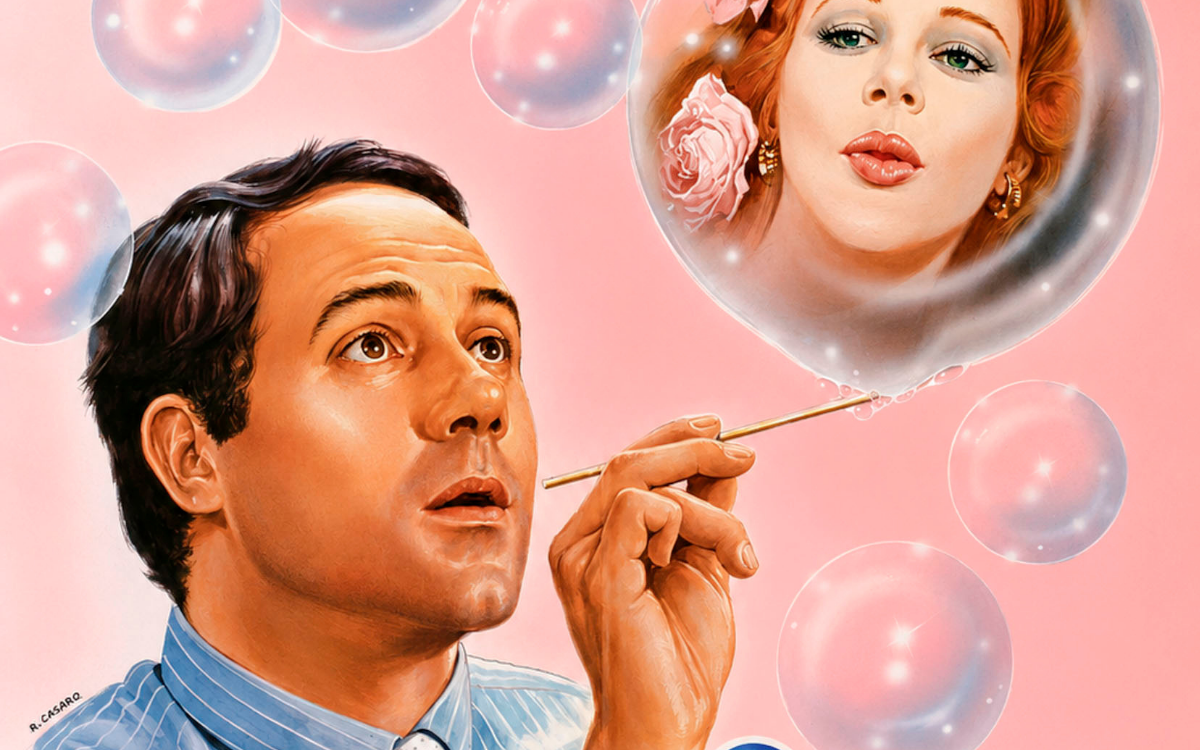
Renato Casaro, who passed away just a few months ago, was the last survivor of a world that has unfortunately faded into little more than a distant memory. For lovers of film poster art, the Treviso-born painter was inextricably linked to the vibrant, high-energy cinema of the 1980s, serving as one of its most fearless chroniclers alongside Enzo Sciotti. Born in Treviso on October 26, 1935, Casaro passed away suddenly on September 30, 2025, just a few weeks short of his ninetieth birthday. His career bridged the golden age of illustrated film posters in the 1950s and the dawn of the digital era, resisting the shift toward the uninspired photographic collages that Hollywood dismissively labels "floating heads". It is no coincidence that Quentin Tarantino turned to Casaro for Once Upon a Time in Hollywood, commissioning him to create the fictional Italian genre movie posters for Leonardo DiCaprio’s character. Casaro was far more than a great artist. Within global pop culture, he came to embody a bygone era of filmmaking, capturing the very essence of a cinematic emotion.
Early Years: From Treviso to the Favalli Studio
Casaro found his calling early, and he found it on the streets. As a teenager, he spent hours copying the posters outside his local theaters in Treviso, fueling his imagination while painting promotional panels for local cinemas. At nineteen, he moved to Rome to join the studio of Augusto Favalli, one of the premier hubs of Italian film advertising. It was a classic apprenticeship: young artists learned on the job by watching, copying, and producing at a relentless pace. Film distributors, after all, had no time to wait for artistic inspiration. Casaro was a remarkably fast learner. By the late 1950s, he was already signing his own posters, and in 1957, he opened his own studio. Major distribution companies soon began selecting his artwork for both domestic and international releases. Still in his early twenties, the young man from Treviso was already leaving his mark on city walls across Italy. Like all poster designers of his generation, Casaro worked independently with distributors. While meeting their commercial requirements, he maintained a distinct, instantly recognizable style that set his work apart from thousands of others.
The Diabolique Poster: Casaro’s Tribute to French Thrillers
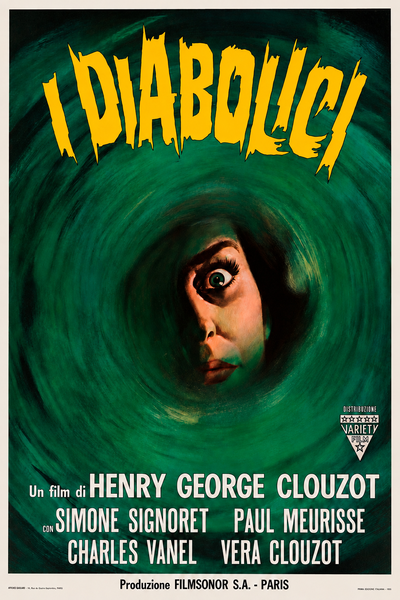
Casaro created his poster for Diabolique for an Italian theatrical re-release in the early 1960s. The terrified face of Véra Clouzot emerges from a murky green vortex beneath a bright yellow title that drips like fresh paint. It is a strikingly mature interpretation of the French master’s celebrated thriller. The vortex imagery echoes Hitchcockian themes of psychoanalysis, repression, and madness. The piece highlights Casaro’s ability to absorb, study, and reinterpret those influences in an increasingly personal artistic voice.
Dino De Laurentiis and Genre Cinema
Casaro’s major breakthrough came in the mid-1960s when legendary producer Dino De Laurentiis selected his artwork for several high-profile productions. His poster for John Huston’s The Bible (1966) brought him international acclaim, cementing his reputation as a go-to artist for major studio launches. His collaboration with De Laurentiis also produced the iconic poster for Mario Bava’s Danger: Diabolik (1968). This marked Casaro's entry into the golden age of Italian genre cinema, a competitive era when he shared clients and crossed paths in Roman studios with fellow artists such as Rodolfo Gasparri, Sandro Symeoni, as well as younger figures such as Aller with whom he would frequently collaborate.
These years were also defined by the Spaghetti Western, during which Casaro formed a close creative bond with director Sergio Leone. He painted the poster for My Name Is Nobody (1973), the Valeri-directed Western based on Leone's concept and starring Terence Hill and Henry Fonda. Later, Casaro created the international poster for Leone's mature masterpiece, Once Upon a Time in America (1984), which was used for its release in Germany and several other countries. Unfortunately, due to creative disagreements between the film's producers and distributors, as Casaro himself recounted in an interview, Italy opted for a much more generic, photographic design instead.
The Story Behind the Iconic Danger: Diabolik Movie Poster
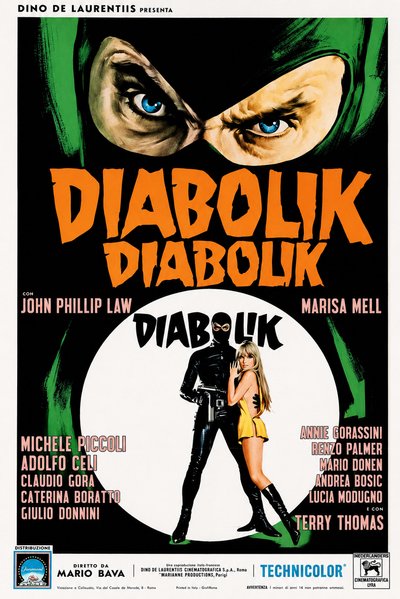
Choosen by De Laurentiis, Casaro’s poster for Danger: Diabolik remains a masterclass in pop iconography. John Phillip Law’s piercing blue eyes stare out from behind a green mask, the title repeats like a visual echo, and a stark white circle frames the masked thief alongside co-star Marisa Mell. The standard two-sheet poster captured a distinct pop aesthetic, blending comic book styles with the trendy, provocative sci-fi look of the era (reminiscent of Barbarella). However, it was the larger four-sheet poster, a minimalist close-up of Diabolik's intense gaze against a pitch-black backdrop, that achieved true cult status, becoming one of the artist's most legendary and recognizable designs.
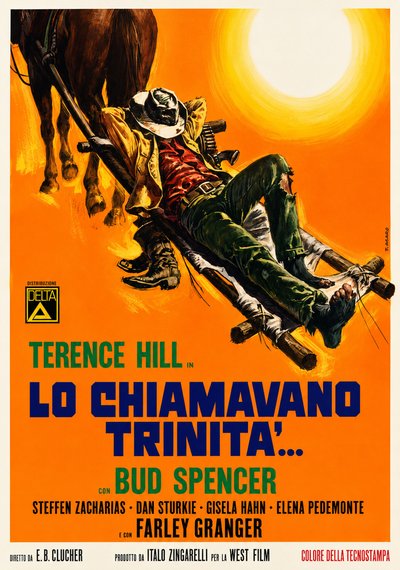
Trinity, Germi, and Monicelli: The 1970s
In 1970, the Italian Western entered its final, satirical phase. This swan song for a genre that refused to die produced They Call Me Trinity, an unprecedented box-office phenomenon. The comedic duo of Terence Hill and Bud Spencer drew record crowds, and the poster that greeted audiences outside cinemas was entirely the work of Casaro's brush. His depiction of a lazy, sun-drenched gunslinger lying on a travois pulled by his horse became ingrained in Italy's cultural identity. Casaro replicated this success the following year with Trinity Is Still My Name, creating some of the most iconic imagery in Italian film history.
The 1970s also marked the height of the Commedia all’italiana, prompting Casaro to design the poster for one of the era's undisputed masterpieces: My Friends (1975). The film’s credits carry a unique dual attribution: "A film by Pietro Germi, directed by Mario Monicelli." A gravely ill Germi had entrusted the project to his close friend Monicelli, who brought it to life while honoring Germi's creative vision. Adapting to a style quite different from his usual aesthetic, Casaro hit the mark perfectly. His image of the five friends' heads bursting out of a jack-in-the-box became the defining symbol of a legendary era in Italian cinema.
Airbrushing the World: The 1980s and 1990s
As painted film posters began to vanish from Italian theaters, Casaro expanded his horizons to become a truly global artist. His success was driven by his mastery of the airbrush, a technique highly sought after by American, German, and Japanese studios. The roster of international blockbusters he illustrated during this period reads like a history of modern cinema: Conan the Barbarian, Never Say Never Again (featuring Sean Connery's return as James Bond), The NeverEnding Story, The Name of the Rose, Bernardo Bertolucci's The Last Emperor, Rambo: First Blood Part II, Dances with Wolves, and Bertolucci's The Sheltering Sky (1990). Even as Photoshop began dominating design studios worldwide, directors and producers looking for an unforgettable image continued to seek him out. Casaro remained the last great master whose brush was still at work.
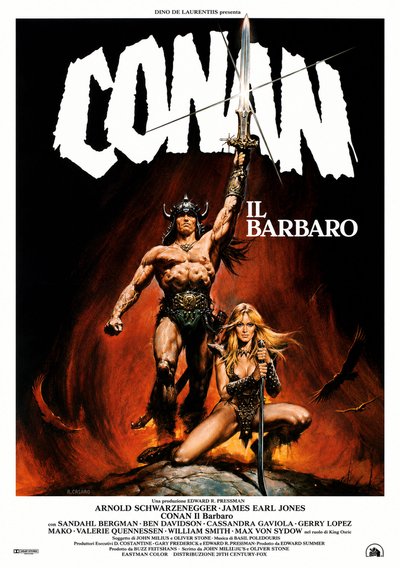
Conan the Barbarian (1982): Arnold Schwarzenegger’s Breakout Artwork
Casaro's painted artwork for Conan the Barbarian captured the definitive image of 1982's epic fantasy boom. Featuring Arnold Schwarzenegger in the breakout role that made him a superstar, the poster depicts the hero holding his sword high above a stone-carved title amid rippling muscles, cold steel, and a fiery sky. It stands as a prime example of the massive international commissions that defined the artist's career during these decades.
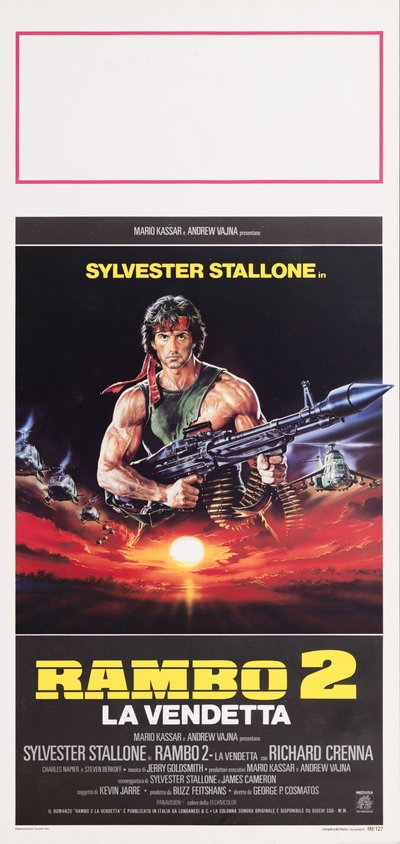
Rambo: First Blood Part II Poster Design by Renato Casaro
The artwork for Rambo: First Blood Part II (George P. Cosmatos, 1985). Stallone stands bare-chested, machine gun in hand, with helicopters overhead and a fiery sunset behind him. The image appears here in the traditional Italian vertical format, with the blank strip at the top reserved for the cinema's name and screening times. In those years, alongside the 100 × 140 cm poster, the 70 × 100 cm format also became increasingly widespread in Italy, often reusing the same painted artwork. Casaro turns the muscular iconography of the 1980s into an airbrushed image of a precision photography itself might envy.
Renato Casaro’s Legacy: From Quentin Tarantino to African Art
With the golden era of painted film posters drawing to a close, Casaro did not lay down his brushes; instead, he simply shifted his focus. He began creating expansive canvas paintings dedicated to Africa and its wildlife, a passion that would dominate the last fifteen years of his life, fuelled by his travels and by a fascination with Africa that he never tired of talking about. Yet, cinema called him back one final time in the most affectionate way possible. In 2019, Quentin Tarantino personally requested Casaro to paint the fictional Italian genre posters for Once Upon a Time in... Hollywood, illustrating the vintage Westerns starring the fictional actor Rick Dalton.
Those who knew Casaro remember him as a kind man and a devoted husband. He often described his wife, Gabriella, as his greatest strength and the true guiding light of his life, sharing with her not only his life but every important decision in his career.
He could often be found visiting the archives where his original posters were kept, patiently hunting down his past creations for a career-spanning book that was always in the works but never quite finished, the quiet routine of a man who had absolutely nothing left to prove. Onlookers recall his profound emotion at the centenary exhibition of the Italian Air Force, curated by Maria Grazia Bella. Upon entering an adjacent room, Casaro discovered the historical works of Marcello Dudovich. It was a poignant moment: the last great modern master of film-poster art visibly moved before one of the great pioneers who had preceded him, bridging a whole century of art history in a single, silent gaze. In his final video appearance, Casaro pointed to his personal favorite among his vast body of work: The Sheltering Sky. Renato Casaro passed away suddenly in September 2025, leaving his wife, friends, and countless ongoing projects behind. He worked until his very last days, and his images continue to do exactly what they have always done: halt passersby in their tracks, capturing their imaginations with the fascinating promise of celluloid dreams.
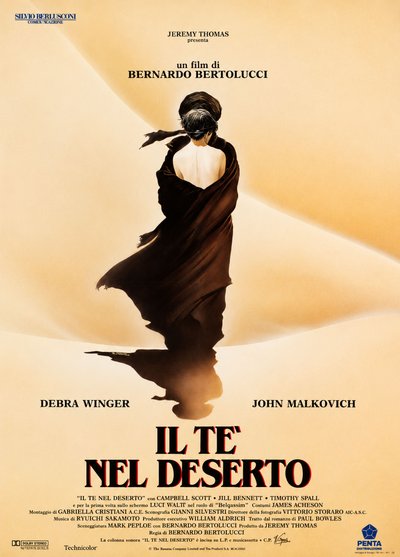
The Living Architecture behind Bertolucci’s the Sheltering Sky Poster
The poster for The Sheltering Sky (Bernardo Bertolucci, 1990). A solitary figure wrapped in a dark cloak descends a massive, sand-colored dune, alone beneath an immense, blinding light. This adaptation of Paul Bowles' novel, starring Debra Winger and John Malkovich, was brought to life in one of the most elegant compositions ever created by Casaro’s airbrush. As he declared in his final public appearance, it was his favorite poster, the quietest image of a spectacularly loud life, a fitting final image for a spectacularly vivid career.
The works reproduced on this page come from the original prints of the period, recovered, photographed and digitally restored by Movie.it.