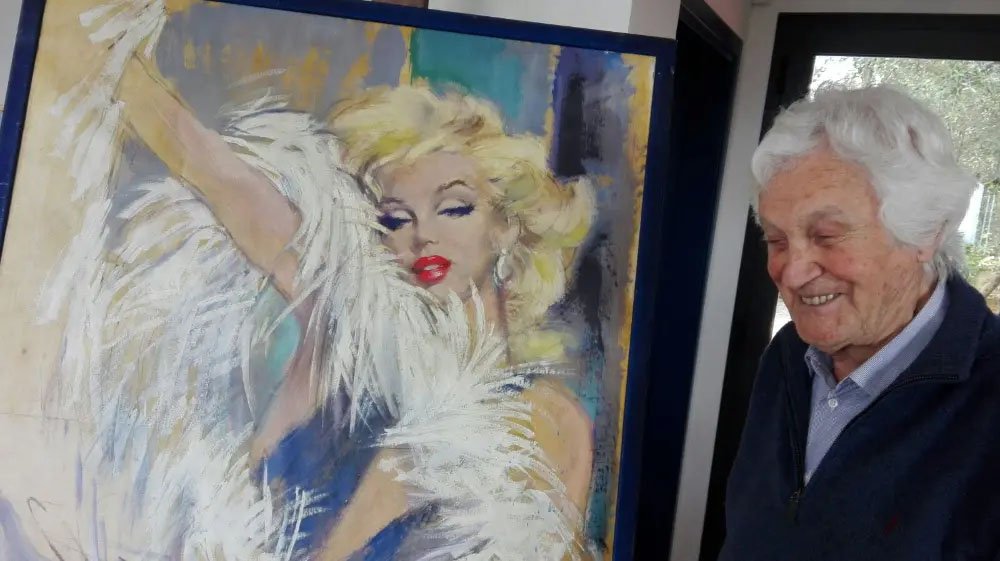
Silvano Campeggi, known as Nano (Florence, 1923-2018), painted the Italian posters for more than three thousand films, from Gone with the Wind to Ben-Hur, and for decades he was the painter MGM turned to for its releases in Italy. Paolo Zelati and Maurizio Baroni recorded this interview in his Florence studio on a Friday in May 2016, when Nano was already past ninety. The "now" of his stories is the now of that day: evenings out in Florence with his wife Elena, reunions with old colleagues, projects still under way. The memories are his too, with the liberties memory takes after sixty years. We give them as he told them, because the way he told them matters as much as the facts.
It was a beautiful Friday in May, when Maurizio Baroni and I turned up at Silvano Campeggi's lovely house in Florence, armed with a video camera and plenty of enthusiasm. Campeggi, known to everyone as Nano, was one of the patron saints of Italian film poster art. He and his wife Elena welcomed us in the garden, and then Silvano took us to the place where "the magic happens": his studio. Maurizio and I immediately started bombarding him with questions, and Nano, happy to share his stories, cheerfully talked us through the paintings on the walls. The camera and recorder were already running when, to back up one of his stories with a real example, he pulled open a drawer in a big metal cabinet. Inside: dozens of original sketches, drawings and studies of every size! Our eyes were popping out of our heads (well, to be honest, mine more than Maurizio's), and we pounced on the cabinet and rummaged through countless paper treasures.
Today, for the first time since Nano and Maurizio passed away, I have gone back to that interview... I hope you enjoy it.
You've always said that, out of all the posters you made, "the best ones ended up in the bin", meaning they were censored or turned down... such as?
Well... it's been so many years that, honestly, I can't remember the details... but I've still got all the sketches and designs, even for the posters that never saw the light of day... and a lot of them were very good, as far as I can remember... (laughs)
Even your poster with the horses for Ben-Hur, one of your most famous works, nearly got turned down...
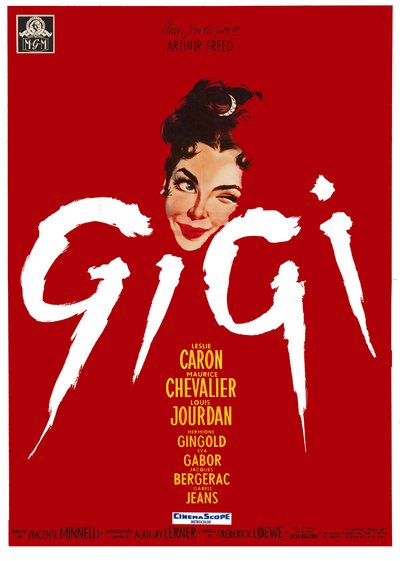
Of course... because they were baffled by the idea I'd gone for. They said: "With all the money we've spent and all the big stars we've got... this fellow draws us some horses?!" (laughs) But then they came round, and the poster was praised all over the world. Another tricky one was Judgment at Nuremberg, a film with several big stars, each of whom deserved the same prominence... so I came up with the red background and the faces, all the same size. I got a lot of compliments for that poster...
Speaking of that creative stage, tell me how you got from the film to the poster design.
First of all, when a film arrived from America, the company would hold a very early preview in its private screening room... and I remember there was always a customs officer there, to make sure the print wasn't copied, stolen or damaged.
The publicity material came with the film: photos, stills, artwork and so on. I'd look through it all and pick whatever I thought would work for photomontages and for building the poster design. Often, for example, a lovely action shot was no good because the actors' faces didn't stand out enough... so I'd look for another one to go with it. But it all had to happen very fast, because the poster had to be printed within twenty or thirty days.
So you had very little time to come up with the right idea...
Oh yes, but once you're used to it, certain things come easily. When I worked for MGM, which felt almost like home, I even had a little table always ready for me, and very often I'd do the first sketch there and then, or the next day at the latest. With other studios, like Rank, Fox, Universal and so on, things were a bit more distant, but always with great respect and professionalism. I also had to follow the printing and vouch for the quality, so I always went to Zincografica Fiorentina, one of the best printers in Italy.
And what do you remember about your special relationship with MGM?
Nothing but good memories. I always got on very well there, and they trusted and respected me even though I was very young... just think, I was twenty-three when I painted my first poster, for Aquila nera. There was also a drawing teacher working with me, older than me and very good: his name was Ercole Brini. The usual practice with distributors was to ask several painters for designs, but MGM tended to give all its publicity to a single painter. Perhaps only for Gone with the Wind did they use more than one...
You joined MGM very young... and before that?
Before that I went to war. I volunteered for the Decima MAS, partly because I'd been a competitive swimmer, so I was perfect for the Decima... a place where it wasn't enough just to die... you had to die with honour! (laughs) And so, after going to Florence for an exam, I deserted. It was hard... I spent my time moving from one hiding place to the next, and the last month I spent in the attic of a church. Life's a funny thing... when I joined up I was full of enthusiasm and ready to die, but the more time went by, the more I realised I really didn't fancy dying like a bischero, as we say in Florence: a right fool!
Have you always loved drawing?
Yes, ever since I was little, and printing too, because my father was a printer and for a while I worked with him in his shop. My father didn't send me to study, but he had plenty of contacts in the art world and knew lots of painters, Rosai for one...
Who, if I'm not mistaken, was one of your teachers...
Yes, he had a big influence on me. Ottone Rosai had his studio in Via San Leonardo, the street we took as boys to go to the gardens, so we got into the habit of saying hello to him and looking at his paintings. Then, once I'd started drawing, my mother told me to take my drawings to Rosai and see what he thought. He said I was very good, but that since I only used bright colours, "I ought to mix a bit of shit in with them".
Back to the posters: was there ever a film that really gave you a hard time?
Not really, no. I'm lucky, because I've got plenty of imagination, so one way or another I always pull it off (laughs)... I even design personalised birthday cards for all our friends and relatives, and I always manage to come up with something original. And I must say I feel appreciated. Here in Florence, for instance, Elena and I go out every evening and we have lots of friends... not to mention that I've won every one of the big Florentine prizes. When I turned ninety they threw me a big party, and the director of the Uffizi came to introduce me.
Do you remember when poster painting began to decline, and then all but disappeared?
Yes, I remember, but I felt that change less than others, partly because by then I'd practically stopped, and partly because it coincided with the call from the Carabinieri, for whom I painted five large battle scenes: a job that kept me busy for a long time. And to be honest, posters weren't giving me much satisfaction any more: MGM was hardly making anything, I'd have had to go to Rome to work and so on, so at a certain point I got fed up and said enough.
Thinking of your famous colleagues in Italian poster art, who were you on good terms with?
With all of them, I have to say. A couple of years ago, when Marinozzi's sketch museum opened, we all met up (except those who are no longer with us) and it was a lovely occasion. There was never any envy or nastiness between us, only affection and respect. I even won the prize three times when the jury was made up of the painters themselves.
And what do you remember about your mentor, Martinati?
Martinati had a Florentine mother; he was a big, friendly, outgoing man, and he helped me a great deal when I was young. I remember that at the end of the war, after Florence was liberated, I started working with the American Red Cross, following them more or less everywhere, even to Austria. But then I felt I needed proper work, so I went to Rome to find Martinati and ask him for a hand...
And that's how you got to MGM?
They were the ones who came looking for me, after seeing my first poster, for Aquila nera, which I'd done thanks to Martinati. With them there was no contract, we worked one poster at a time, and whether it was Gone with the Wind or Tom & Jerry, the fee was the same. And I remember that my invoice was made out directly by Zincografica Fiorentina, once the poster had been printed.
Tell me how you worked at MGM on those famous photographic "locandine" (Italian small format)?
It was very simple: I looked through the material available, picked the most telling photos and then made a sketch showing how they should be put together.
Do you remember any particular advice Martinati gave you?
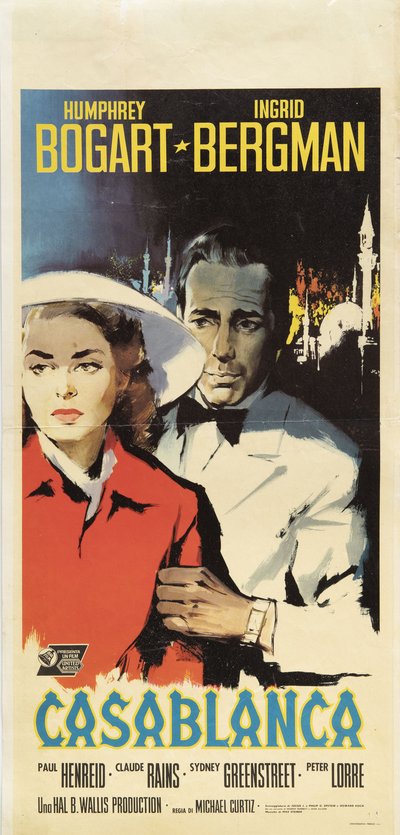
I worked with him on a lot of Warner films, like Casablanca. As for advice, nothing really, because painters don't give each other advice... everyone has his own style. Martinati helped me a lot professionally, taking me under his wing and showing me how things were done, one job at a time.
Besides horses, I'd say your other icon, or obsession, has always been Marilyn Monroe, whom you've drawn countless times in every possible setting: tell me about when you met her...
...it was so long ago (laughs)... Marilyn was great fun, lively and witty, and she knew exactly how to sell her image, especially when you think that until then the Hollywood divas had been women like Greta Garbo, completely different figures. Marilyn was the diva of the modern age, a diva nobody has forgotten, still a true icon all over the world. At the time, Warner Bros. had asked me to paint a portrait of Marilyn to be shown at the Rome premiere of The Prince and the Showgirl. Then the head of Warner started having doubts and second thoughts, because I'd painted it from a photograph alone and, since it was an important occasion, he thought it best to send me to Hollywood so I could touch up the painting in front of Marilyn herself. That way, if she'd posed for me, nobody could say I'd painted it from a photograph! So that's how we met... and it was great fun... not least because we were both little more than kids. I remember the painting was on display, the press was there, and we were all waiting for Marilyn, who just didn't turn up...
Well, her lateness is practically legendary...
Yes, but this time there was also the fact that Marilyn was nervous and worried that a "Florentine painter" had come all the way from Italy to paint her... who knows what she was imagining! (laughs) So at a certain point she sent her secretary ahead to check me out, and the secretary looked at me and smiled... and she must have told her: "Don't worry, he's just a boy!" So in she came, wiggling her hips, and said to me: "Maestro... do I have to take my clothes off?" Now, I've repeated that line thousands of times, and I even use it as the title of my exhibitions of the work I've done on her.
Hang on... what did you say to Marilyn?!
(laughs)... I said yes, of course, that's what I'd come for! Then she played along and pretended to undress... (laughs)... then she posed next to the painting and I made my corrections... which were very minor compared with how it started out. At one o'clock they brought us packed lunches, just like on a film set, and Marilyn and I ate together, very quickly; over lunch she promised me that as soon as she came to Florence, she'd have me show her round the city. I never saw her again... but I've drawn her all my life...
Finally, tell me in a few words how your famous painted "fotobusta" (Italian lobby card) for Gone with the Wind came about.
Well, actually, I almost always go by my first impression, the first feelings a subject gives me; of course that first impression then gets adjusted and worked on, but that's how it went with Gone with the Wind too. I always put myself in the shoes of a filmgoer who may never have heard of the film and needs an idea of what to expect. It isn't always easy, especially when it comes to sex, which isn't the least bit fun when it's overdone. I've always shown sex and sensuality in an idealised, suggested way rather than an explicit one... for me a single expression is enough to convey sex and passion...
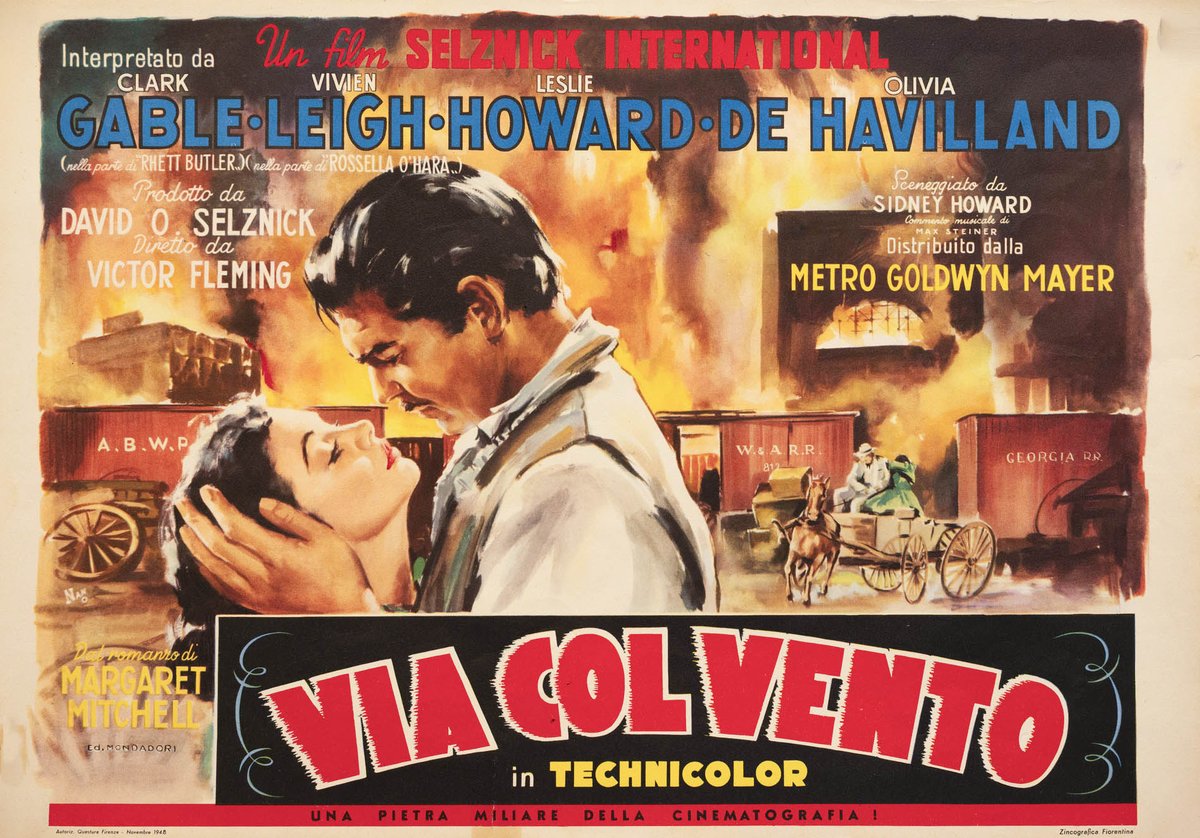
And indeed, the kiss between Scarlett and Rhett on your "fotobusta" opens up a whole world...
Exactly, that was the idea.
The works reproduced on this page come from the original prints of the period, recovered, photographed and digitally restored by Movie.it.
You may also like

Marilyn Monroe at 100: A Hollywood Legend

Rome on Screen: Six Films That Made the Eternal City a Star