
Actresses and the invention of self
A journey through the great actresses of Italian cinema who, between Neorealism and the 1960s, transformed the face of femininity on the silver screen, redefining beauty, identity and freedom of expression.
May 7, 2026
There is something both deliberate and inevitably arbitrary about bringing together, under a title such as The Women of Italian Cinema, a constellation of actresses who, rather than simply playing roles, have transformed the very notion of femininity on the screen. This is not merely a collection of artistic biographies: it is as if, through these figures, cinema has sought to pursue and, at times, anticipate a more profound transformation concerning the way women perceive themselves and present themselves.
The focus is on actresses who emerged between the 1950s and 1960s, marking a transition that is not only chronological but almost geological: a rupture. On the one hand, there is the world of silent-film divas and the rigid female characters of Fascist-era cinema; on the other, there is a new generation, which often arrives without a pedigree or an academic background, but with a presence that asks no permission. In the middle, like a seismic event, lies Italian Neorealism.

Neorealism and the changing female gaze
Between 1945 and 1950, it was not just an aesthetic choice: it was a demand for truth. Directors wanted bodies, voices and places as they were, without embellishment. It is a subtraction that becomes a revelation. And for this, new performers were needed: no longer polished actresses, but raw, lived-in presences. Figures such as Anna Magnani or Aldo Fabrizi, who came from the world of variety shows, or young people with no established track record, but who were capable of bringing something to the screen that resembled an unmediated truth.
However, perhaps the most radical change is taking place elsewhere, off-set. The war has already disrupted the old order: with men at the front, women have taken up space, assumed responsibilities and experienced a form of autonomy, albeit still tentative. In the 1950s, none of this had yet become part of the collective consciousness; there was not even a place where women could identify with one another, and there was no television. However, a profound transformation was taking place, almost clandestinely.
Cinema thus becomes one of the few tools for exchange: an imperfect but shared mirror. In the dark cinemas, which are both a refuge and a public space, women observe other women. Their clothes, their make-up, their gestures, even their silences: everything is learned, imitated, reinvented. Magazines and photo stories extend this experience, transforming actresses into living, accessible, almost domestic role models.
Beauty, independence and new icons of Italian cinema
In the 1950s, the relationship between cinema and female beauty became extremely close, but it took on a different character. It is no longer merely an adornment or a characteristic: it becomes a form of expression. It is true that many actresses came from beauty pageants, but that displayed, self-aware beauty no longer necessarily signified subordination. On the contrary, it can be a form of affirmation, even of transgression. Far from being a passive object, the female body began to tell its own story.
This is where the tide turns. For decades, cinema had imposed a set of unspoken rules on actresses: they had to be desirable, of course, but within certain limits; they had to serve the male lead; they had to embody types rather than individuals. From the 1950s onwards, slowly but surely, this pattern began to crack. The new actresses, products of a changing era, brought a less predictable, more contradictory and more autonomous form of femininity to the screen.
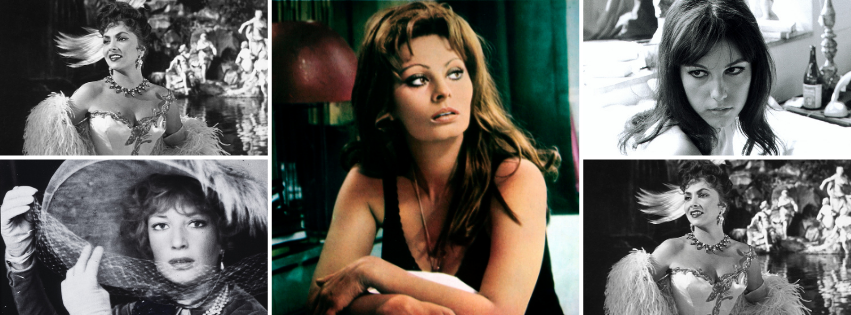
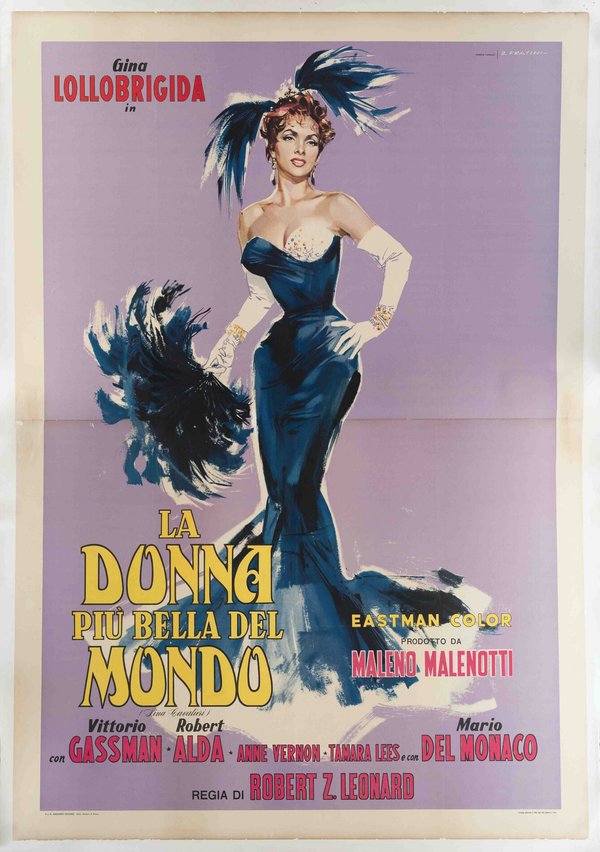
Thus, in this collection, the faces of Marisa Allasio, Claudia Cardinale, Gina Lollobrigida, Sophia Loren, Silvana Mangano, Stefania Sandrelli, Catherine Spaak and Monica Vitti appear: not as a mere succession of careers, but as variations on a common theme, that of a female identity in motion.
Each entry, each film, each brief synopsis is merely a pretext, almost a springboard, for observing this transformation. Because, ultimately, what matters is not so much the stories told by the films as what they reveal: the gradual emergence of a new image of women, still uncertain, still contradictory, but now impossible to trace back to the old order.