Nouvelle Vague: the French cinema that changed historyTranslated with https://laratranslate.com
A journey through French Nouvelle Vague, the movement that revolutionised cinematic language in the 1950s and 1960s with creative freedom, realism and visual innovation, leaving a legacy that lives on in cinema and in the art of vintage posters.
May 6, 2026
In the 1950s, French cinema was trapped in rigid, predictable narrative patterns. The stories were well crafted but often predictable, the directing methodical, and the sets controlled like static tableaux. Then came the young filmmakers of the Nouvelle Vague, armed with courage, passion and light cameras, ready to portray life as it was, without rigid scripts and without filters. As Michel Marie explained in his book La Nouvelle Vague, une école artistique, this movement was not a passing fad, but a genuine artistic revolution, destined to redefine the very concept of cinema.
The Revolutionary Grammar of the Nouvelle Vague
The directors of the Nouvelle Vague did not merely make films: they invented a new cinematic grammar. Hand-held camerawork, jump cuts, and the use of natural sound and real light became tools for depicting everyday life. The city of Paris, the cafés, the streets and the faces of young people became as central to the films as the characters themselves. The critics of Cahiers du cinéma guided them, transforming them into self-aware auteurs capable of imbuing their films with their own vision. Truffaut, Godard, Resnais, Chabrol and Rohmer demonstrated that cinema could be original, poetic and personal without sacrificing narrative power.
Iconic films and posters
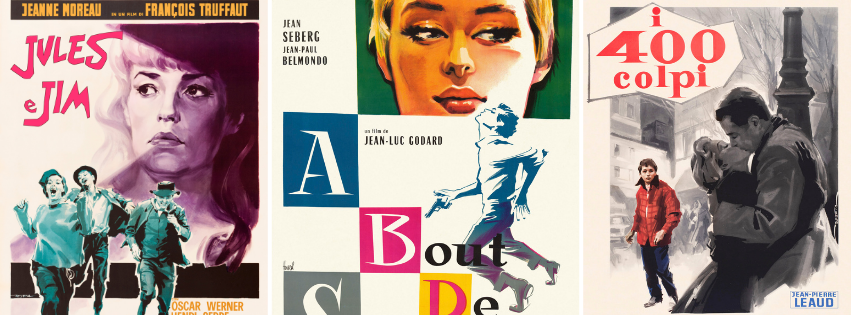
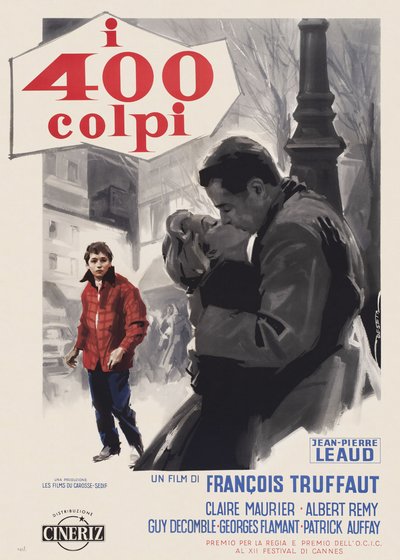
Each Nouvelle Vague film is a cinematic manifesto. Truffaut’s Les Quatre Cents Coups captures childhood with rebellion and melancholy, while Godard’s À bout de souffle defies traditional grammar with interrupted dialogue and non-linear editing. Marie points out that even the seemingly improvised scenes are imbued with truth and emotion: here, cinema becomes a direct, living experience that engages the viewer.
For enthusiasts of film posters and vintage playbills, the Nouvelle Vague offers a priceless legacy. Each poster is not just an image, but a piece of history, a symbol of an era in which French cinema redefined aesthetics and authorship. The posters for films by Truffaut, Godard and Rohmer already capture the movement’s energy, spontaneity and stylistic revolution in their artwork, making them genuine collector’s items.
Legacy and influence on visual culture
To read Michel Marie today is to understand the enduring power of the Nouvelle Vague. It is an invitation to be bold, to take risks, to create without fear. Cinema can be personal without being selfish, original without being contrived, and poetic without becoming abstract. La Nouvelle Vague has influenced generations of filmmakers around the world and continues to inspire filmgoers, collectors of vintage film posters, and those who dream of stories on the big screen.
The allure of posters and playbills
Every restored playbill, every vintage poster, tells the story of an artistic revolution. For those who today browse online collections or hang them on their walls at home, the message is clear: cinema is art, life and passion, and the Nouvelle Vague is its most authentic heartbeat. Posters and playbills from 1950s and 1960s French films are not merely visual souvenirs: they are fragments of history, testimonies to an art form that redefined the concept of the auteur and the public’s perception of cinema.