
Censorship and film posters: when posters were ‘censored’
There was a time, not so long ago, when even a cinema poster could disturb the peace.
April 26, 2026
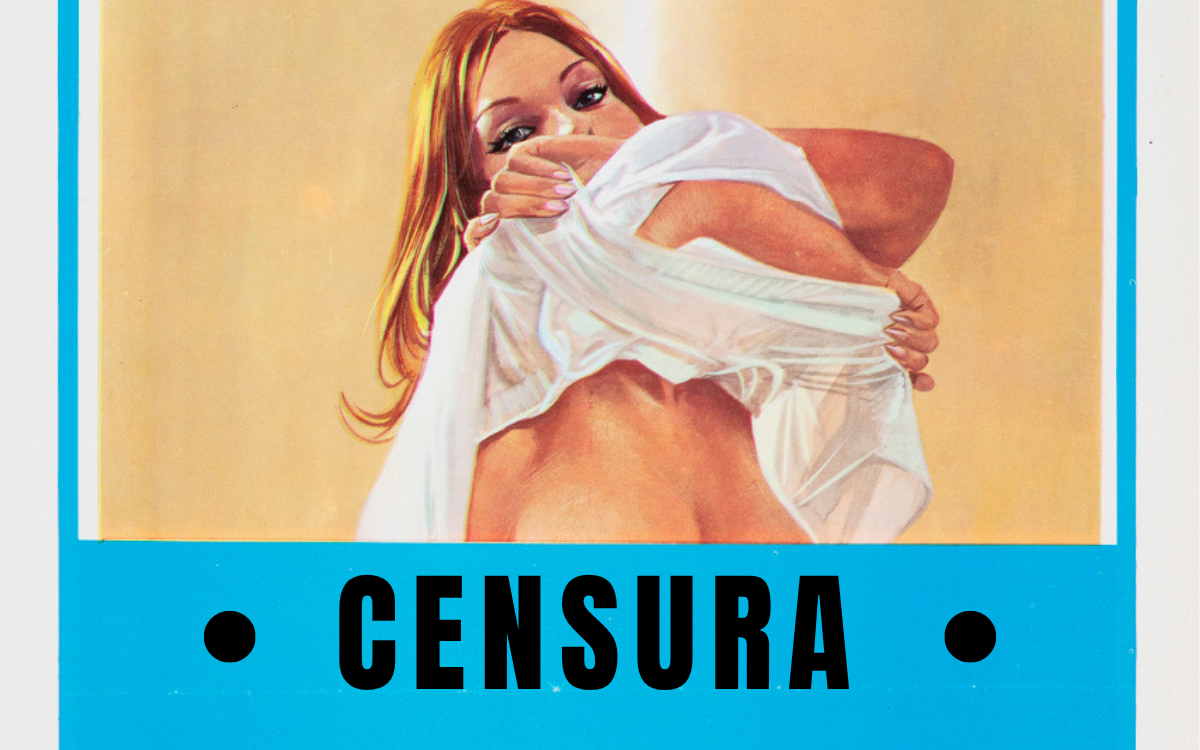
Today, images know no modesty. They flow everywhere, without asking permission, multiplied by screens that never blush. But there was a time, not so long ago, when even a cinema poster could disturb the public peace. All it took was a thigh shown a little too prominently, a breast hinted at rather than revealed, a pose deemed insolent. Then the State, or those acting on its behalf, would intervene with that meticulous severity that Italy has often reserved for things that are both useless and irresistible.
“Putting the pants on” the posters
In the jargon of the trade, they used to say – with an expression that today sounds like something out of a comedy of manners that they were ‘putting underpants’ on a poster. It wasn’t a metaphor. They would take the already printed poster and correct it by hand. A piece of white paper, a touch-up with a brush, a strip of paper stuck on with bureaucratic discretion. Where the body was too revealing, typographical modesty suddenly appeared.
And so a bare leg became perfectly modest, a low-cut neckline was covered up, a hip ceased to be suggestive. Each copy could turn out differently, as is the case with handcrafted works. Italian censorship, after all, lacked the geometric rigour of modern dictatorships: it preferred improvisation, patchwork, and local solutions.
Censorship and the female body
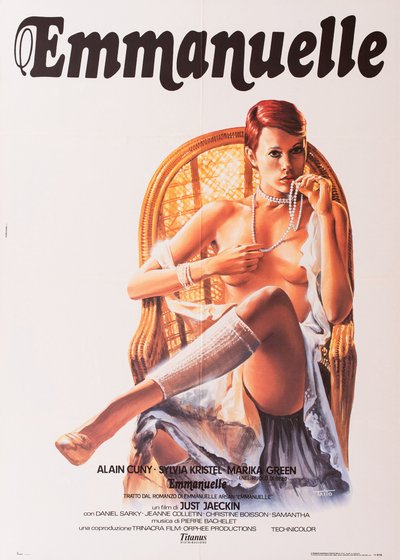
Its origins date back a long way. As early as the nineteenth century, public displays were subject to scrutiny. With the advent of cinema, this scrutiny naturally extended to film posters. Anything that might offend public morality, undermine public decency or breach propriety was subject to scrutiny. The female form, particularly when well-drawn, became one of the main targets of this scrutiny.
The films most exposed to this ‘pedagogy of the eye’ were those that dared to portray desire. Malizia, starring Laura Antonelli, caused a stir not only in cinemas: a mere image of it hanging on a wall was enough to cause a stir. Emmanuelle, starring Sylvia Kristel, brought with it an international eroticism that Italy welcomed with curiosity and rejected with zeal. Bernardo Bertolucci’s was dogged by a scandalous reputation that inevitably spilled over into the promotional materials as well. And Tinto Brass’s cinema transformed this tension between desire and prohibition into a true national poetics.
Between control and compromise
At first, it was the public authorities who exercised control, but later the industry itself took on this role, quickly learning to self-censor. Better to be safe than sorry, rather than have an advertising campaign blocked. Thus, artistic freedom often ended up negotiating with commercial necessity, in one of the most typically Italian compromises: to cause a stir, but not too much.
Signs of censorship
Few documents and many indirect clues remain of this story. Unlike films, posters left behind fewer written records and more clues. Much of what we know comes from the accounts of poster artists, from examining the surviving materials, and from the differences between one copy and another. A suspicious brushstroke, a rectangle of white space, a suddenly altered balance: these are the archives of censorship.
Paradoxically, it is precisely these interventions that enhance the appeal of the posters today. They do not diminish them: they complicate them. Each cover illustrates the conflict between image and power, between private desire and public morality, between what an era wanted to see and what it pretended to reject.
The value today
This is why censored posters are now among the most sought-after items in film collecting. They are not merely graphic works, but historical artefacts. Not just posters, but vignettes of Italian history.
In the Movie.it collection, these materials are once again on display in all their ambiguity: images created to catch the eye, yet which have survived precisely because of those who sought to prevent it.