Piero Ermanno Iaia, Between Figurative Art and Modernity
By the Movie.it Editorial Team
July 2, 2026
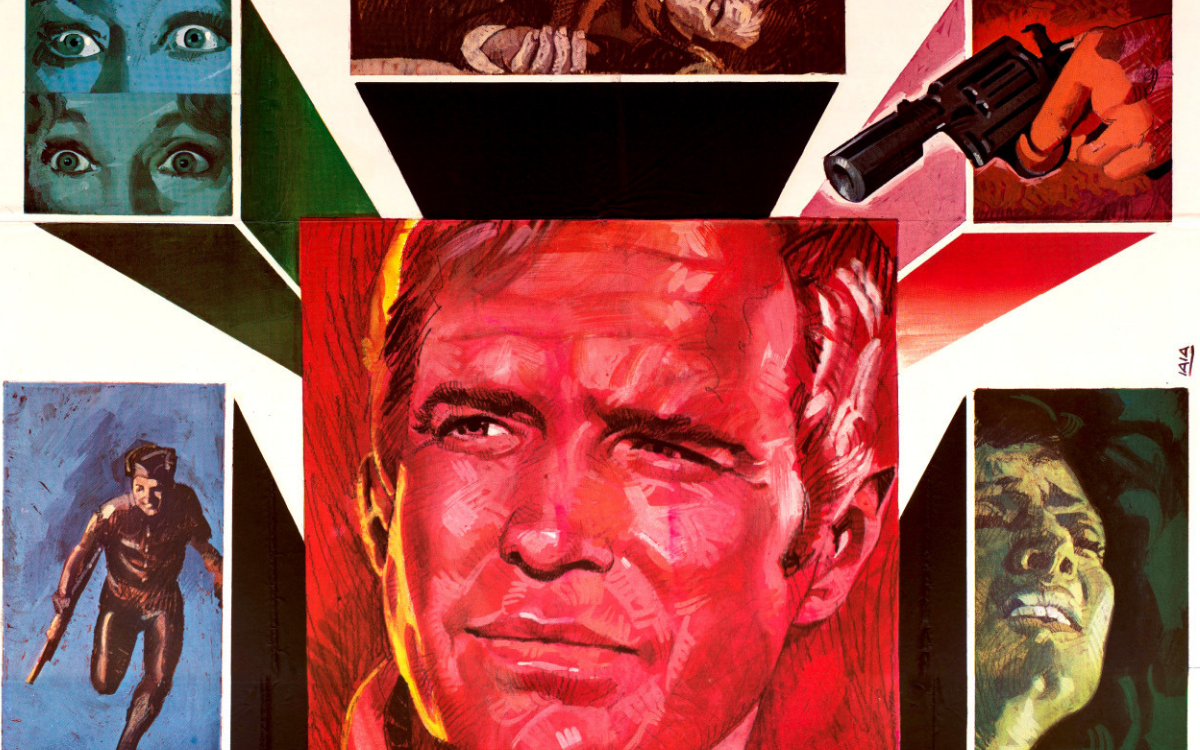
Among Italy's "cinema painters", Piero Ermanno Iaia is the great experimenter: an artist who made stylistic research the heart of his work, convinced that it was the poster painter's own job to "set the trend" and launch new graphic solutions in step with changing times. Able to shift in an instant from the warmest figurative painting to flat-tint silkscreen, from collage to op art, Iaia signed some eight hundred preparatory designs for more than four hundred films, working at a dizzying pace for the leading Italian and American companies. His signature, "Piero Iaia", closes some of the most surprising and modern images in twentieth-century Italian film advertising art.
From the Academy to the Favalli Studio: the Debut of an Innovator
Piero Ermanno Iaia was born in Rome in 1933. After the art lyceum he graduated from the Academy of Fine Arts and, from 1959, joined the Favalli Studio, one of the most qualified workshops then active for the cinema. His debut on the big screen came in 1961 with the poster for Richard Fleischer's Barabbas, whose advertising campaign drew on several artists, among them Averardo Ciriello: to Iaia fell the colossal twenty-four-sheet format, distributed in Italy by De Laurentiis and in the United States by Paramount.
His first major design for an Italian film dates from 1964, and it is already a small manifesto of intent: for Pietro Germi's Seduced and Abandoned (Sedotta e abbandonata), Iaia portrayed Stefania Sandrelli ringed by a crowd of obsessive male faces, almost grotesque in their expressions, from the leering to the severe, summing up the whole condition of women in the Italy of honour killings. Like his fellow cinema painters, from Sandro Symeoni to the Nistri brothers, Iaia would submit his artwork in the hope that it would be chosen: Hoping they would be selected and paid for solely for promotional use in cinemas, while he retained ownership of the works for any other purpose. He worked for MGM, Twentieth Century Fox and Universal, signing posters destined for foreign markets alone.
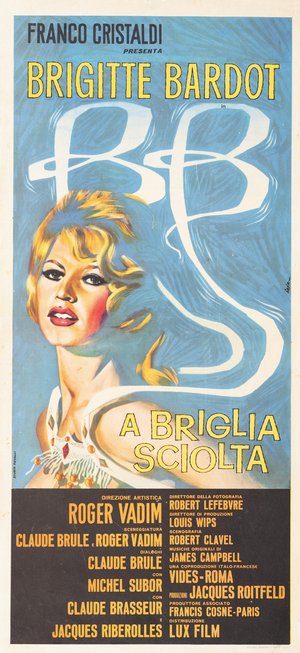
Please, Not Now! (Roger Vadim, 1961)
The "locandina" (Italian small format) for Please, Not Now!, a French comedy with Brigitte Bardot directed by Roger Vadim, is a hymn to the star as pure trademark. Against a blue ground crossed by scratchy brushstrokes looms the huge white "BB" monogram, while below, Bardot's face, with its tousled blonde hair and lips lit red, fixes the viewer with ironic sensuality. Iaia stakes everything on the graphic force of the two initials and on the contrast between the gestural background and the softness of the portrait. It is the image of a star reduced to her iconic essence, years before pop art would make that a rule.
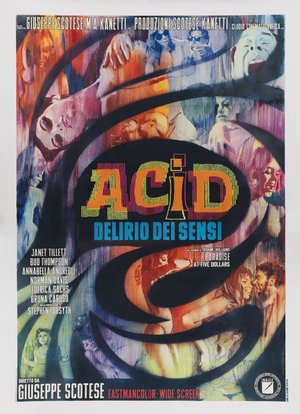
Acid Delirium of the Senses (Giuseppe M. Scotese, 1968)
A wholly different world in the poster for Acid Delirium of the Senses, Giuseppe Maria Scotese's exposé film on hallucinogens. Here Iaia surrenders to a vertiginous psychedelic composition: a black whirlpool sucks in dozens of faces and bodies that dissolve into liquid, acid colours, from orange to turquoise to violet, between ecstasy and anguish. The title "ACID" is resolved with vibrant, striped op-art lettering. This is Iaia at his most daring and experimental, able to translate the title's "delirium of the senses" into an image and to anticipate the visual aesthetic of an entire era.
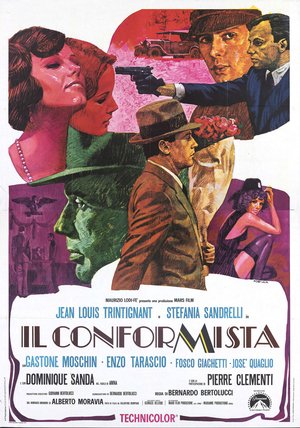
The Conformist (Bernardo Bertolucci, 1970)
The poster for Bernardo Bertolucci's The Conformist, adapted from Moravia's novel, is the proving ground of his modern turn. Iaia executes it in silkscreen, in flat and brilliant, even fluorescent tints, building a mosaic of faces and scenes: Jean-Louis Trintignant in profile beneath his hat, Stefania Sandrelli and Dominique Sanda, a levelled pistol, a vintage car, the greenish shadow of Fascist power. The title, in Deco lettering, evokes the film's 1930s setting. It is a poster that abandons the brushstroke for the clean graphic mark, perfectly in tune with the visual rigour of Bertolucci's masterpiece.
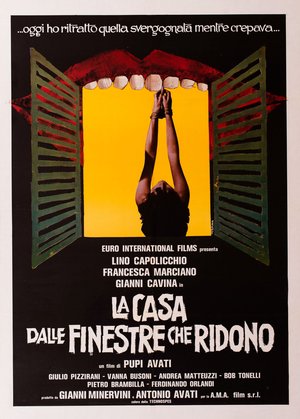
The House with Laughing Windows (Pupi Avati, 1976)
In the poster for Pupi Avati's The House with Laughing Windows, Iaia reaches a peak of unsettling synthesis. Against a black ground, two open green shutters frame a blinding yellow panel and, above, turn into a red mouth bristling with teeth: the "laughing window" of the title. At the centre, a body hangs upside down, wrists bound, hinting at the film's brutal secret. The brush-drawn title and the violent blocks of black, yellow and red make this one of the most memorable horror posters in Italian cinema, alongside those signed by colleagues such as Averardo Ciriello.
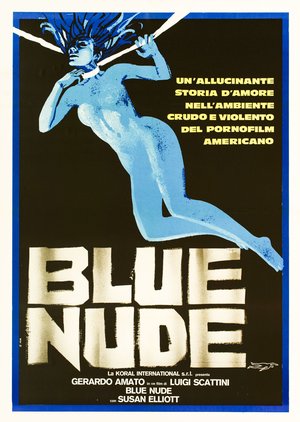
Blue Nude (Luigi Scattini, 1977)
The poster for Luigi Scattini's Blue Nude, a story set in the world of American adult film, is likewise a feat of radical graphic design. Against a deep black ground, a nude female figure tinted entirely in blue soars on the diagonal, hair streaming, in an almost silkscreen rendering of grainy textures. The title, in white letters drawn with a broad brush, and the single yellow note of the tagline complete a spare, powerful composition. Iaia renounces all titillation in favour of the abstract force of a single colour, showing just how far his research stood from traditional poster art.
Iaia's Style: The Trend Set by the Brush
What sets Iaia apart is his almost militant conviction that the poster painter should anticipate public taste rather than chase it. For this reason he moved freely between silkscreen, collage and op art and the most classical painterly techniques, such as the pastels and gouache of the "antique-flavoured" design for Robert Altman's Fool for Love (Follia d'amore, 1985), warmly received at Fox precisely for its unfashionable elegance.
This freedom sometimes cost him rejections. His designs for Silvio Narizzano's Redneck (1972) were turned down as too painterly, and those for Bertolucci's 1900 (Novecento, 1976) were rejected by Fox over the presence of a sickle, read as an allusion to Communism. But in that case something extraordinary happened: Bertolucci, a great admirer of the painted poster, failed to change the studio's mind and so decided to buy Iaia's designs out of his own pocket, even knowing them unusable. Another director, Francesco Rosi, asked him instead, for Christ Stopped at Eboli (Cristo si è fermato a Eboli, 1979), to bring his own hand closer to the painterly manner of Carlo Levi. The Italian poster for Hitchcock's Psycho, incidentally, is also his.
Iaia's Legacy
Piero Ermanno Iaia died in Rome in 2023, after a very long career that wound down at the end of the 1980s with the twenty-four-sheet for the Taviani brothers' Night Sun (Il sole anche di notte). Alongside his more than four hundred films, he left an intense body of work in television and publishing, confirming an unrivalled versatility.
His legacy is that of a cultivated, restless artist, able to hold together the figurative tradition and the most radical openings toward modernity, from pop art to avant-garde graphics. Rediscovered in recent years through the volume Pittori di Cinema and the retrospectives of the Cineteca di Bologna, where he was presented alongside Alessandro Biffignandi, Iaia remains, together with masters such as Symeoni, Casaro and the Nistri brothers, one of the most experimental interpreters of that unrepeatable era when the walls of Italian cities were open-air art galleries.
The works reproduced on this page come from the original prints of the period, recovered, photographed and digitally restored by Movie.it.