
Italian Peplum: When Myth Came Back to Life on Screen
By the Movie.it Editorial Team
April 30, 2026
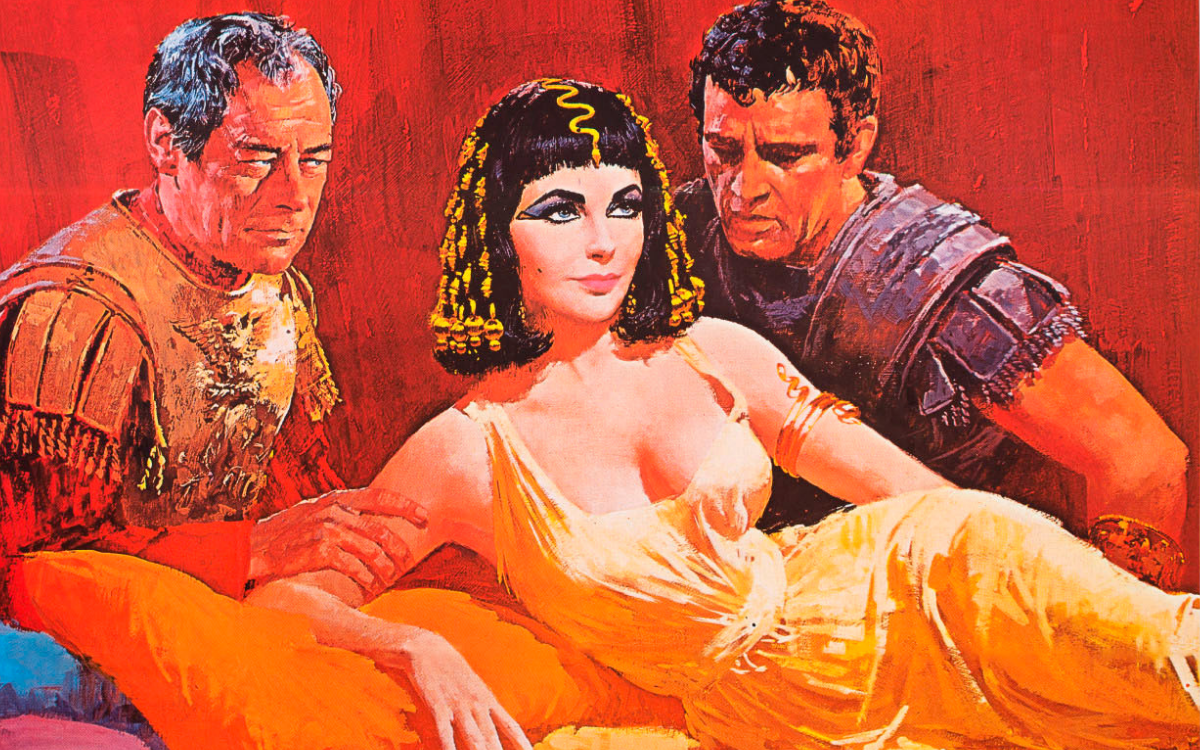
There was a time in Italian cinema when the past was not memory, but spectacle:a past built of columns, arenas, deities, and sculpted bodies, more imagined than reconstructed, more dreamed than faithfully depicted. That era became known as the "Peplum" period.
Cinecittà and the Reinvented Ancient World
Greco-Roman antiquity had held an irresistible allure since the earliest days of cinema, but it was between the 1950s and the 1960s that this allure grew into an industry.
At the Cinecittà studios, buoyed by international investment, filmmakers set out to recreate the ancient world on a grand scale.
Productions such as Ulysses, together with the international epics made at Cinecittà, helped prepare the ground. The real turning point came in 1958 with Hercules, starring Steve Reeves, whose success launched the great Italian Peplum boom.
The Peplum never aimed for strict historical accuracy.
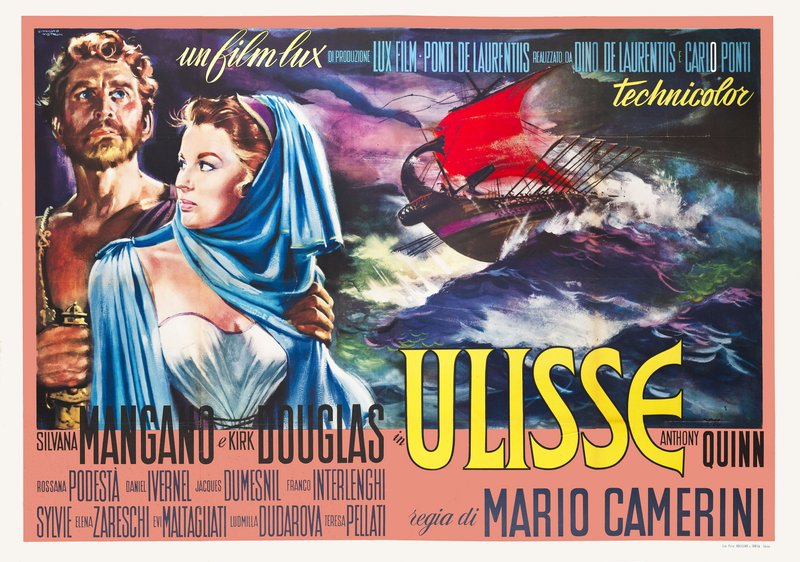
Monumental films that, without meaning to, paved the way for an era no one had quite expected. Their success encouraged Italian producers to try their own hand at the genre, with far smaller budgets but far greater freedom.
Out of that gap between ambition and means, the Peplum was born: a form of cinema that replaced money with invention. Sets were reused, costumes passed from one production to the next, special effects stayed simple but ingenious. Above all, a new kind of body took centre stage, not actors in the traditional sense, but physical presences, almost like statues brought to life.
Heroes From Another Era
The Peplum portrayed its protagonists as living legends.
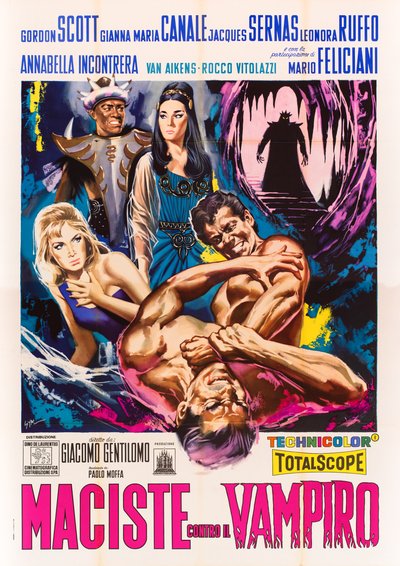
Figures such as Maciste, Hercules and Ursus became recurring figures, rather than actual characters, played by athletes and bodybuilders like Steve Reeves, Gordon Scott, Kirk Morris and many others.
These were bodies rather than voices, presences rather than performers.
They spoke little and acted a great deal, while seasoned actors such as Arnoldo Foà and Enrico Maria Salerno provided the counterpoint, often cast as the villain.
Between Myth and Invention
The Peplum never aimed for strict historical accuracy. Alongside its more "classic" titles sat films that leaned openly into fantasy, such as Goliath and the Vampires, Hercules in the Haunted World , among many others.
Here the ancient world became little more than a pretext, a vessel in which adventure, horror, humour, and spectacle could all coexist.
The result was a hybrid cinema, free-wheeling, at times naive, but surprisingly full of life.
The genre's lifespan was short. Within a few years it evolved, changed and increasingly blended with other genres, before running almost suddenly out of steam by the mid-1960s. It was as though, having dreamed that past into being, audiences simply no longer needed it.
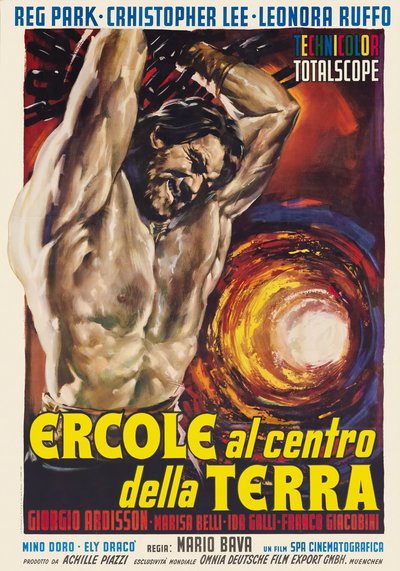
Posters: The Legend on Paper
Perhaps more than the films themselves, Peplum posters captured the spirit of the genre. Heroic figures, vivid colour, dramatic composition: these images never merely depicted a scene, they built an entire image of the myth. In that sense, the posters were as much a part of the genre's imagery as the films were.
Today, the Peplum stands as far more than a forgotten genre. It represents a singular moment in Italian cinema, where industry and invention met, and a visual world that inspired generations of talented poster artists.
At Movie.it, the posters from this era still evoke a cinema that, with modest means and boundless imagination, managed to reinvent the ancient world.
Special thanks to Sebastiano Cannavò for his invaluable collaboration.
The works reproduced on this page come from the original prints of the period, recovered, photographed and digitally restored by Movie.it.