
Film Noir: The Dark Side of Cinema
By the Movie.it Editorial Team
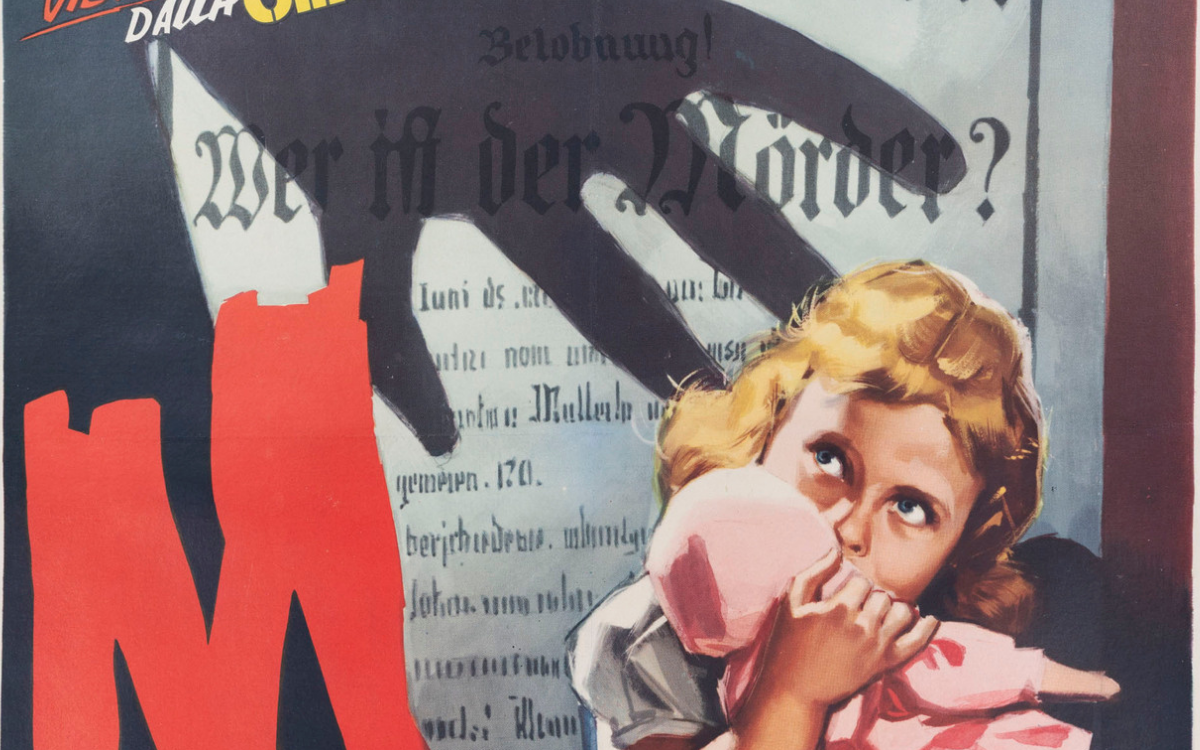
May 11, 2026
A journey through shadow, desire, and moral ambiguity: film noir as an unstable form of modern cinema, where every image conceals an incomplete truth, and every story reveals the most fragile side of the human being.
The Origins of Film Noir
Film noir has never been a "clean" genre. Nor is it, in the history of cinema, a category that submits easily to definition: it tends to resist, the way an underexposed photograph resists being read at a glance. People speak of shadows, detectives, enigmatic women, cities at night. But these are only labels. In reality, film noir is a lingering feeling: the sense that life always carries a second meaning, and that this meaning offers no reassurance.
It is curious that so many of its most powerful images come from films that never claimed to be noir at all. Noir often arrives later, taking shape in the minds of viewers and critics, as though time itself needed to invent the category in order to explain a certain unease.
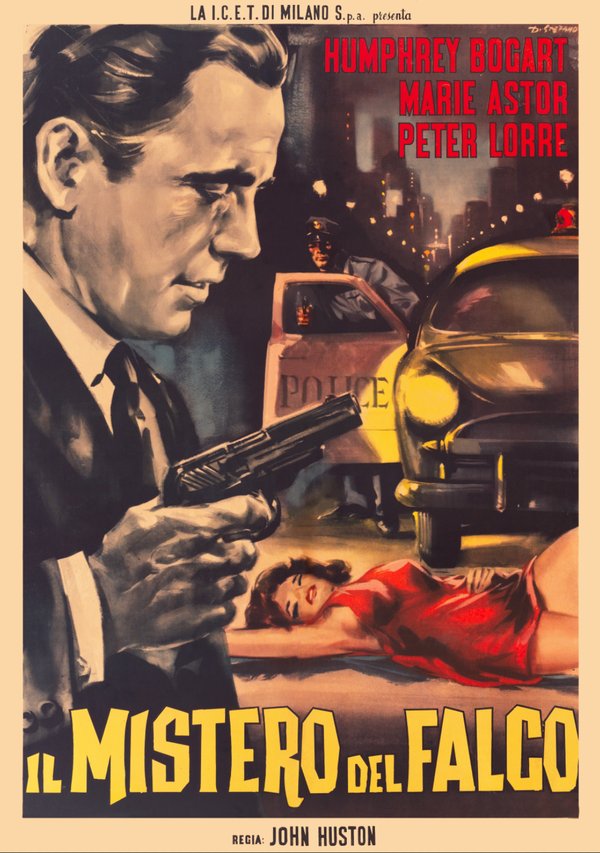
In The Maltese Falcon, for instance, it is already all there: the object as obsession, conversation as mask, truth as something that can never be fully grasped. But it is not yet a system. It is a world only just learning to distrust itself. The characters move as though they already know that every gesture can be read more than one way. The detective does not simply solve a case; he makes his way through a set of possible versions of reality.Casablanca poster
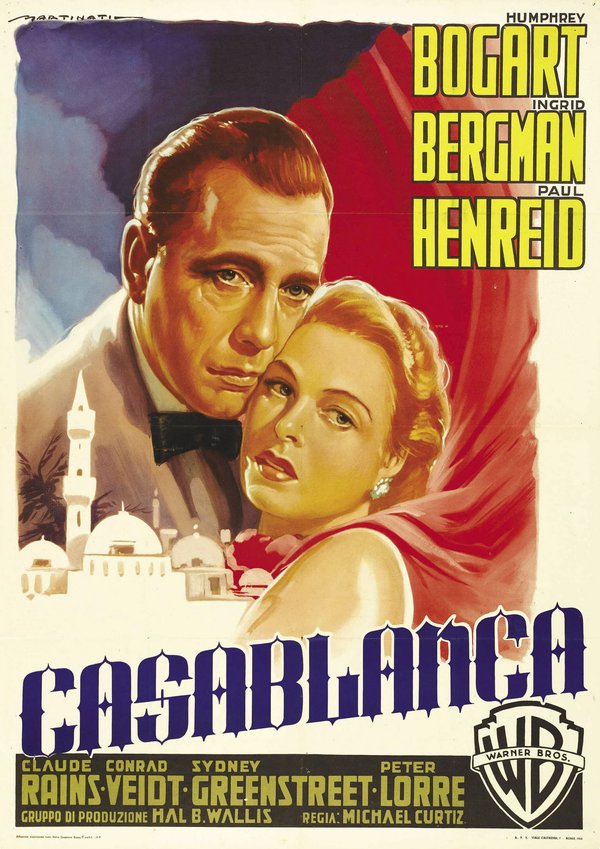
Then comes Casablanca, though not generally classified as film noir, shares several of its defining traits and filed instead under romantic melodrama, or nostalgia. Yet it is hard to ignore how closely it follows a genuinely noir logic: the impossibility of a clean choice, morality bent out of shape by history, the past returning in the form of an irreversible decision. Rick is no hero; he is a man who has learned to live with loss. In that sense, the film leans closer to disillusionment than to consolation.
Looked at without too much reverence, film noir is, in the end, always a matter of compromise.
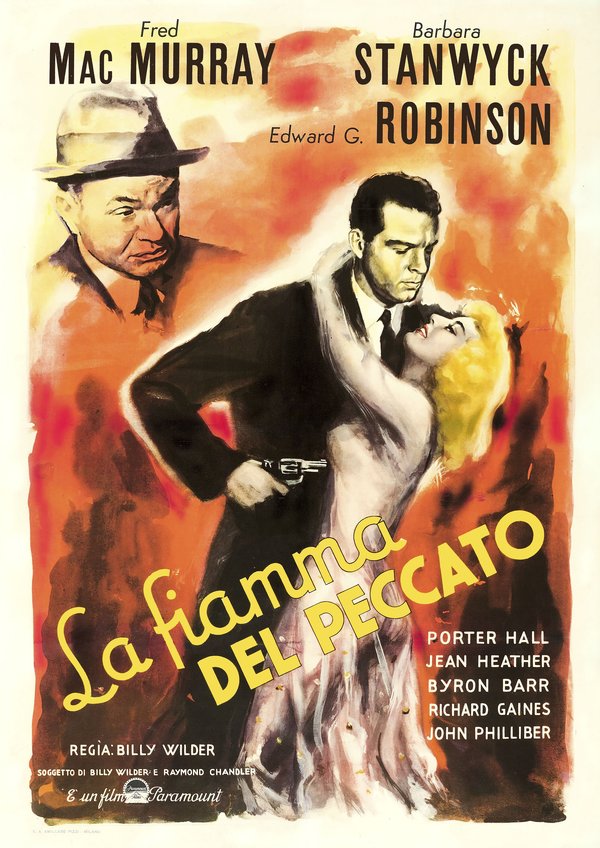
In Double Indemnity, that logic sharpens into something almost schematic in its moral precision. Here there is no more room for romantic ambiguity. Desire becomes a self-destructive narrative machine. The narrator's voice saves nothing; if anything, it sounds like a confession already given, already recorded. Crime is not the exception here, it is the method, and the film's own language becomes complicit in the betrayal.
If there is a common thread running through all this, it is not found in plot, character, or ending, but in a particular sense of urban fate. Noir cities are never mere backdrops. They are moral systems: streets that lead nowhere, offices lit by dimly glowing lamps, hotel rooms where time appears to stop. Everything in them is built to suggest that freedom is only ever a variation on entrapment.
Film criticism has a habit of romanticising noir, turning it into an elegant aesthetic of despair. But this is a reading that comes later, imposed after the fact. In the films themselves there is something rawer, less containable. The characters are not symbols. They are people who make mistakes with unsettling consistency.
That, perhaps, is why film noir endures: not for its style, instantly recognisable as that style is, the contrast of light and shadow, the trench coat, the glass of whisky, but because it continues to offer a framework for thinking about human error without reducing it to mere accident.
Film Noir Posters
Today, the posters for these films reinforce that same impression. They were never simply promotional tools. They are visual condensations of a moral universe: a face cut across by light, an off-kilter gun, a woman who never quite meets the viewer's eye. These are images that seem to promise clarity and instead deliver ambiguity.
Looking at them again, one senses that film noir was never really a distinct era of cinema at all, but an intermittent way of seeing. It resurfaces every time cinema stops trusting its own stories and starts watching, instead, for whatever contradicts them.
And perhaps that is its most lasting quality: it treats evil not as an exception, but as an ever-present possibility. Not as spectacle, but as structure.
Film noir does not explain. It suggests. And in doing so, it leaves behind a question cinema has never fully answered: how far are we willing to recognise, in its characters, something that concerns us far too closely.
The works reproduced on this page come from the original prints of the period, recovered, photographed and digitally restored by Movie.it.