
Mondo movie: when cinema set out to tell the story of the world (and ended up chasing it)
Edited by Paolo Zelati, Editorial Director
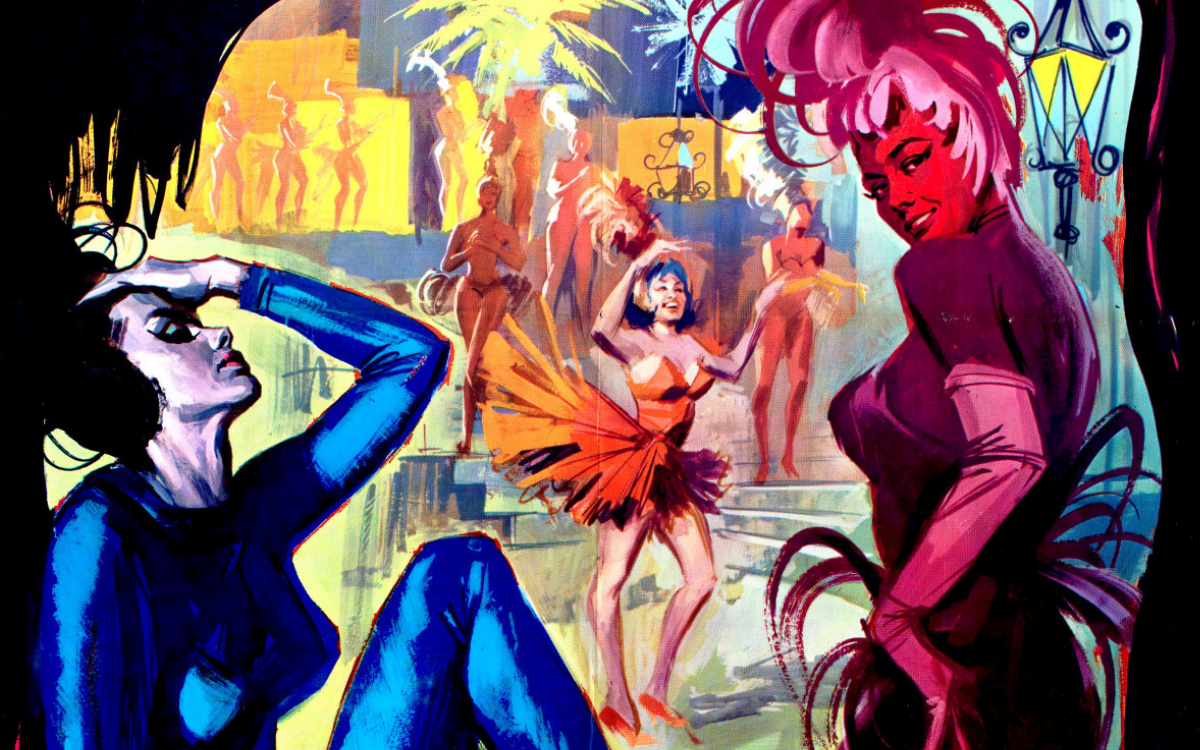
April 29, 2026
There was a time, between the late 1950s and the early 1960s, when Italian cinema believed it could fit the entire world onto the screen.
Not simply describe it: show it, through its nights, its excesses, its promises.
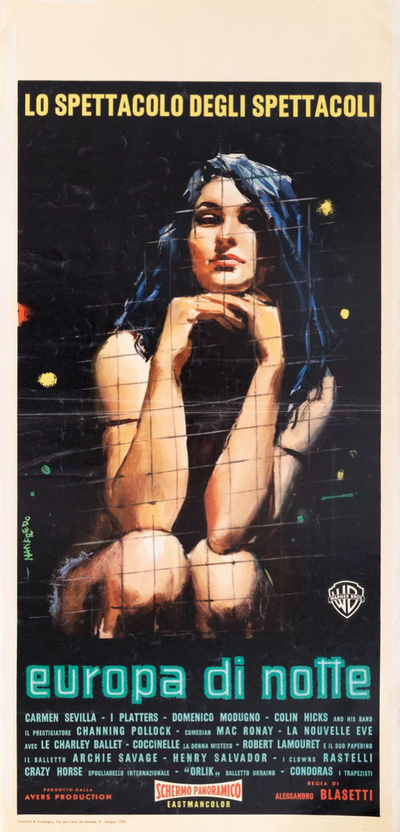
In 1959, Alessandro Blasetti directed European Nights, a film that appears to be a documentary but is, in fact, something else entirely: a perspective seduced by spectacle rather than concerned with reality.
In European Nights, the great capitals, Paris, Vienna, London, Madrid, become a stage.
The film brings together variety acts, late-night performances, bodies, lights, and music.
This is not the "real" world so much as the world as it chooses to present itself to the eye.
It was an instant success, and, as so often happens in cinema, success bred imitation.
Within a few years a new genre had taken shape: the so-called mondo movie.
Among the most famous titles: Mondo Cane, Goodbye Uncle Tom, Africa Blood and Guts
Films that claimed to show the world "as it is," while in reality selecting only its most striking elements: the unusual, the disturbing, the extreme.
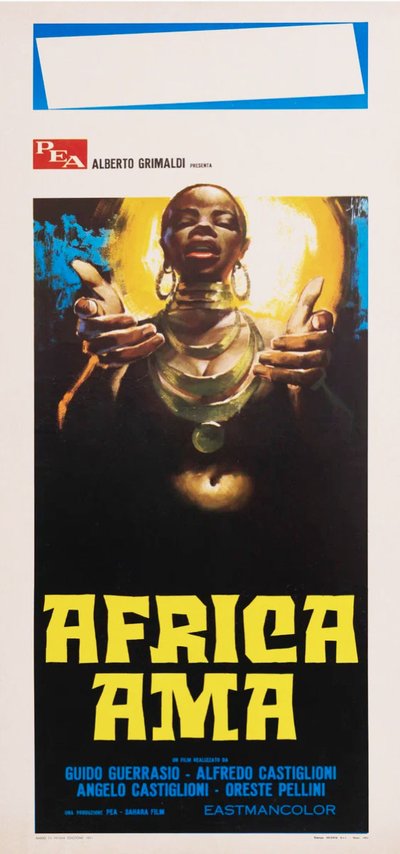
Change: From the Everyday to the Sensational
At first, something of genuine curiosity survives. Then it begins to change.
The narrative drifts toward heightened, exoticised ritual; nudity appears more and more often; images of violence and deliberately shocking episodes multiply.
The world is no longer simply observed; it is selected for its impact. Films such as Africa Uncensored amplify this trend, presenting raw and controversial images that divide audiences and critics.
The Role of the Spectator
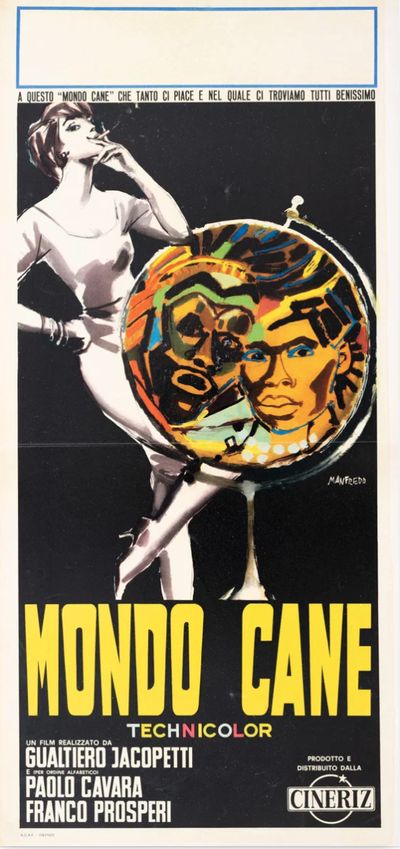
The success of films like Mondo Cane reveals something deeper at work.
It is not only cinema that is changing; it is the viewer's own gaze.
We move from curiosity to the pursuit of shock, from observation to a fascination with the extreme.
The world becomes spectacle.
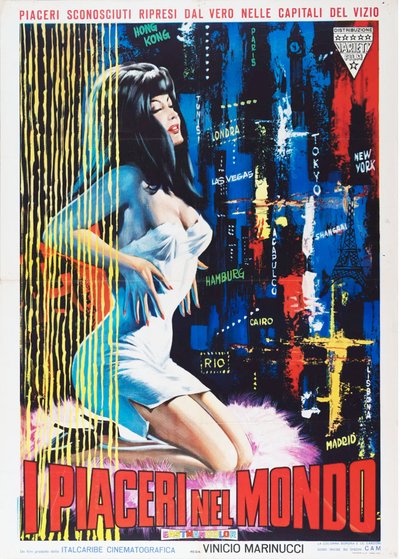
Posters: Promising the World
The film posters of this era reflect the same evolution.
Mondo movie posters emphasise the exotic, suggest transgression and promise “forbidden” images.
They do not describe the film so much as amplify it, and in that sense they become part of the phenomenon itself, not simply advertising for it.
Today, mondo movie stand as a controversial but pivotal chapter in post-war Italian cinema, and their posters remain as testimony to that era.
At Movie.it, these materials let us look closely at the exact moment cinema stopped depicting the world, and started chasing it instead.
Special thanks to Sebastiano Cannavò for his valuable collaboration.
The works reproduced on this page come from the original prints of the period, recovered, photographed and digitally restored by Movie.it.