Italian Neorealism
When cinema portrayed real life.
April 24, 2026
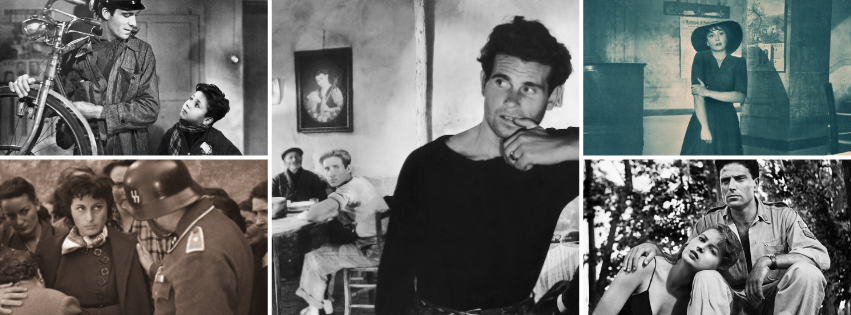
There was a time in the history of cinema when reality took the place of fiction. A time when the streets, ordinary people and everyday struggles took centre stage. That moment one that no artist could ever have imagined in their wildest dreams is Italian Neorealism.
Born during the dark years of World War II and flourishing in the postwar period, Neorealism was not merely a cinematic movement, but a true revolution in the way we see the world: depicting life as it is, unfiltered and unmasked, as if cinema itself were truth in motion.
A cinema rooted in reality
In a war-torn Italy, cinema by necessity and by fate stepped beyond the confines of the studios and ventured out into the streets. The rubble became the backdrop for a life that brooked no pretense; ordinary people, the poor, and the marginalized became the actors and protagonists.
Everyday life becomes the greatest story ever told. This is not merely an artistic choice: Cinecittà is occupied, and the studios are out of commission. Filming on location is no longer a whim, but a necessity. And from that necessity emerges a new language, destined to revolutionize and influence world cinema.
Stories that capture the heart of Italy:
- Poverty
- Jobs
- Dignity
- Hope
- Reconstruction
The films that made history
Some songs have become symbols of this era:
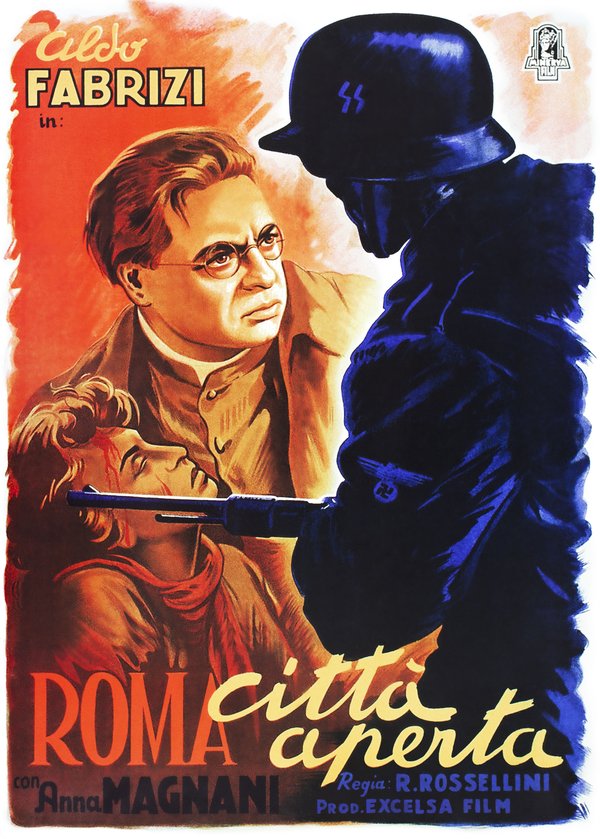
Roma città aperta di Roberto Rossellini
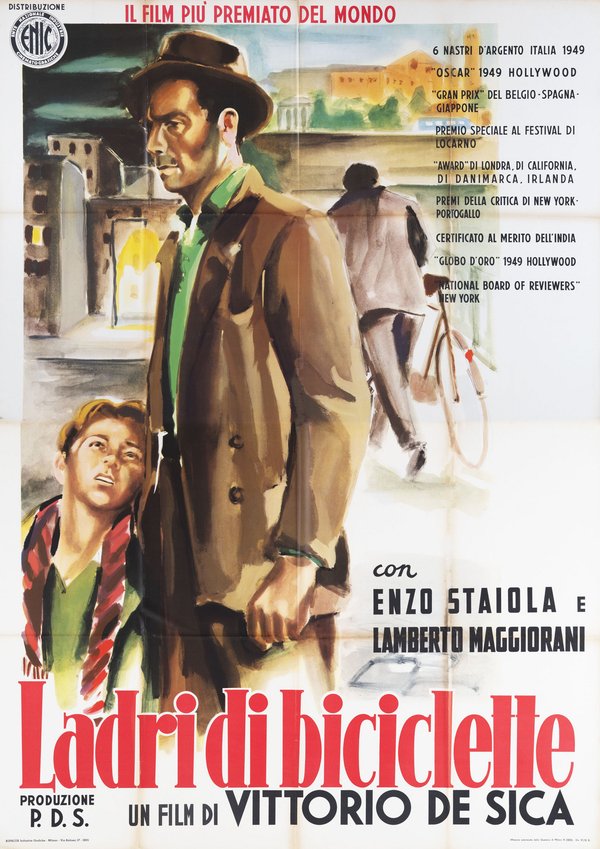
Ladri di biciclette di Vittorio De Sica
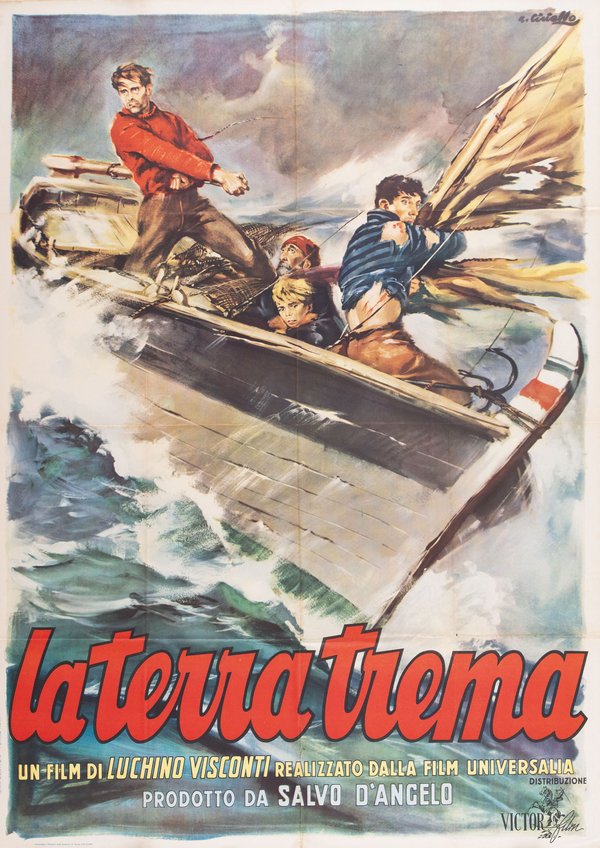
La terra trema di Luchino Visconti
They are not just films; they are monuments to an era the Resistance, the postwar period, the lives of the underprivileged, of the people whom history had pushed to the margins. They are a mirror of our Italy, which is finally looking itself in the eye and recognizing itself.
The posters, too, reflected reality
There is one aspect that is often overlooked but is essential to understanding the essence of Neorealism: movie posters. In Italy, unlike in other countries, posters were not merely advertising tools.
They were true works of art. The great Italian poster artists timeless masters reinterpreted films through their paintings, transforming gritty stories into extraordinary, dramatic images brimming with an evocative power that only art can convey, without succumbing to the temptation of superficiality.
It is precisely this ability to blend reality with artistic interpretation that makes the posters from that period so fascinating, sought-after and, in a way, timeless.
A movement that transcends time
Neorealism has no end. It is not a fire that goes out, but a flame that continues to burn, fuelled by the truth of life.
As early as the 1950s, Italian cinema shifted tone, becoming lighter and moving away from the drama that had previously defined it.
Yet that vision of reality, that way of observing the world, continues to influence directors, screenwriters and even the public. More than a style, Neorealism is a philosophy of life, a lens through which we continue to view the world: attentive, human, rooted in everyday life.
Neorealism today: cinema and collecting
Today, those films and images live on, not least through film posters. Every poster is:
- a historical account
- an artistic interpretation
- a snippet of cinema
On Movie.it, you can rediscover these unique pieces, which tell the story not just of a film, but of an entire cultural era.