
Decamerotic Cinema: The Decameron Boom of the 1970s
Edited by Paolo Zelati, Editorial Director
May 20, 2026
A journey through the bodies, mischief and lost innocence of 1970s Decamerotic cinema, before Italian erotic comedy moved towards more overtly commercial formulas.
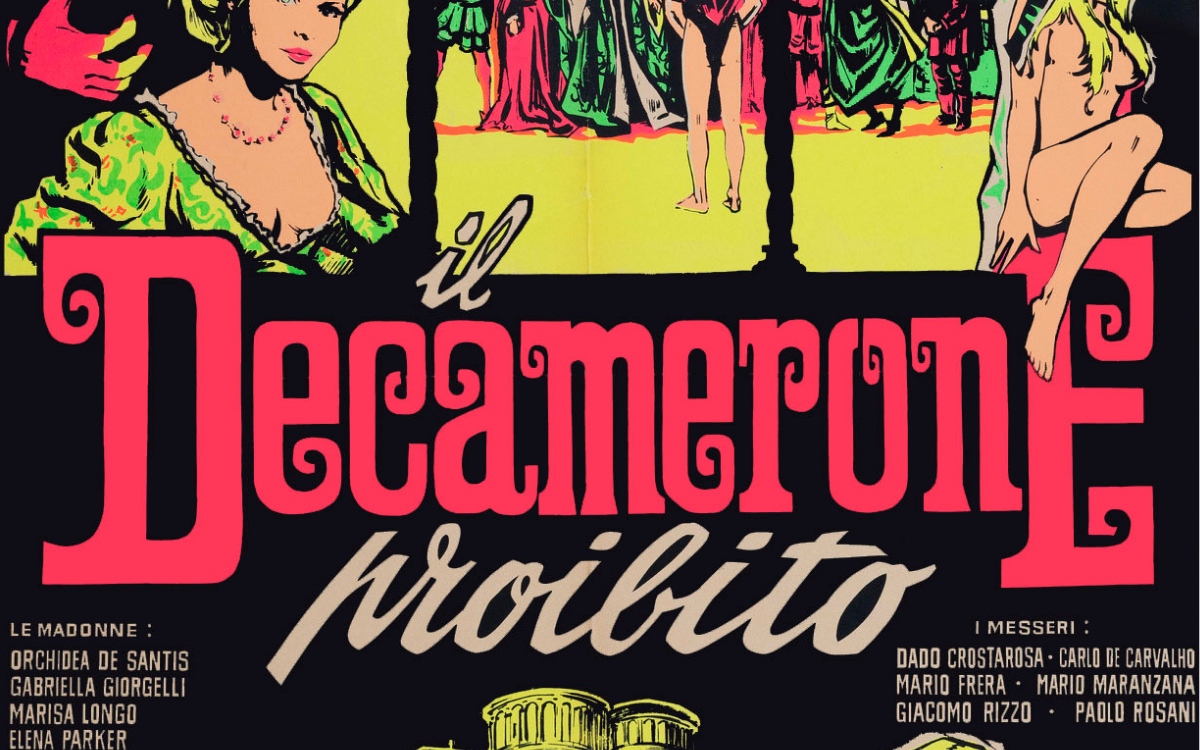
In the early 1970s, Italian cinema was swept by a new wave of freedom, sensuality and irony. Erotic period comedies had appeared before, but it was the success of Pier Paolo Pasolini’s The Decameron in 1971 that turned the trend into a full-blown commercial phenomenon. Its success quickly convinced producers and distributors of the commercial potential of erotic period comedy. The Decamerotic, or Boccaccian, cycle exploded soon afterwards, producing around fifty films in Italy during the first half of the decade. This explosion of pop cinema quite literally papered the cities in colourful, provocative, magnetic vintage posters, the kind that caught the eye of anyone walking past.
These films, often dismissed too quickly as mere "B movies," carried a raw, irresistible energy of their own. The directors of the era staked everything on the visual power of nudity and laughter, setting their stories in an imagined Middle Ages of taverns, cuckolded husbands, cunning priests, and lying peasants. There was no room for heavy drama or complicated speeches: bodies moved across the screen with total abandon. Behind that imaginary Middle Ages lay the Italy of the early 1970s, transformed by changing attitudes towards the body and sexuality, before erotic comedy settled into increasingly standardised commercial formulas.
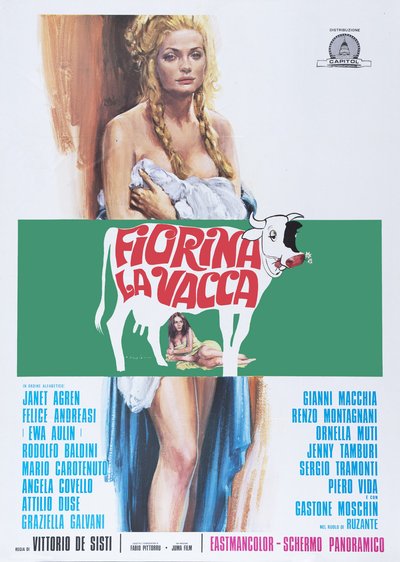
Fiorina the Cow (1972)
Loosely inspired by characters and situations from the plays of Ruzante, the film plunges into the deepest countryside. In this rural world there are no fine manners: everything is instinct, deception, flaring passion and raucous laughter. The film's original poster is a genuine visual gem, perfectly evoking an ancient universe where physical beauty and cunning were the only currencies that truly mattered. Watching it today means rediscovering the ruthless, entertaining irony of the Italian countryside.
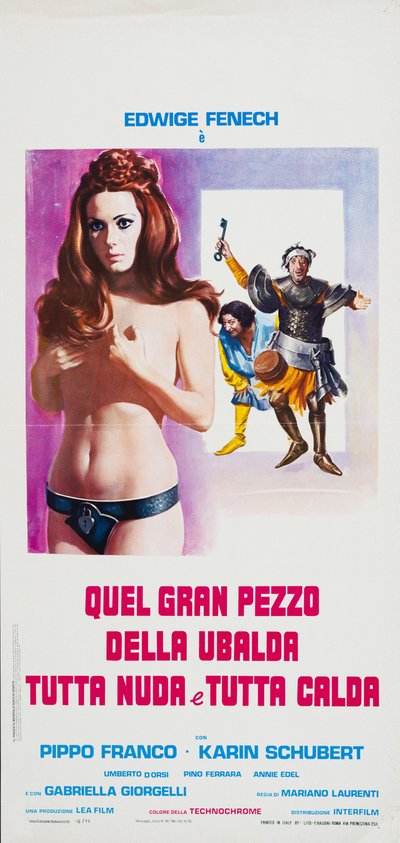
Ubalda, All Naked and Warm (1972)
A title that is itself a shout, an up-close provocation that forces the viewer to look. Here comedy becomes absolute and sensuality sheds any trace of guilt, turning instead into a playful, liberating game. The vintage "locandina" (Italian small format) has become one of the most recognisable images of Decamerotic cinema: it perfectly captures the essence of an erotic charge that is visceral yet light, and which today feels like a small miracle of boldness and freedom.
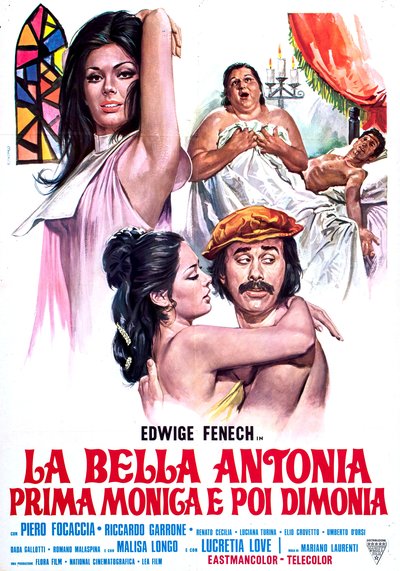
Beautiful Antonia, First a Nun Then a Demon (1972)
The perfect short circuit between the sacred and the profane, set in provincial Italy. Within stone cloisters, among nun's habits and hidden desires, a wickedly funny satire of hypocrisy plays out. The original poster works the ambiguity of sin beautifully, layering knowing glances suspended somewhere between penance and unrestrained fun.
The true secret of this unrepeatable season, the element that made these films unforgettable presences on city walls, lay in the faces and bodies of their leading women. Stunning actresses like Edwige Fenech, Barbara Bouchet and Femi Benussi lit up the screen with a proud, sunlit, overwhelming beauty. Alongside them, beloved actors such as Renzo Montagnani and Enrico Montesano made all of Italy laugh. Their posters, produced in the different formats of Italian theatrical advertising, now stand as vivid documents of that era; they are not mere collector's items, but open windows onto an era when Italian cinema knew how to be bold, scandalous and remarkably alive.
The works reproduced on this page come from original period prints, recovered, photographed and digitally restored by Movie.it.