
Prophetic Cinema: 10 Films That Already Saw the Future
Edited by Paolo Zelati, Editorial Director
May 27, 2026
Some films, on release, looked like pure science fiction, or at best a slightly overblown satire. Then the future arrived, and they turned out to be documentaries.
The ten titles that follow don't just tell stories: they pose questions about technology, media power and human nature that still remain unanswered today. If you haven't seen them, now is the time. If you've already seen them, perhaps it's time to watch them again with fresh eyes.
1. Metropolis (1927) - Automation and Inequality
Fritz Lang · Silent Film / German Expressionism
Themes: Automation, social inequality, artificial intelligence
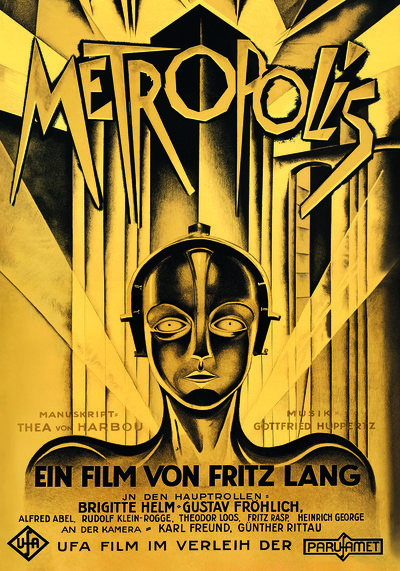
Almost a century before Jeff Bezos built his warehouses and Elon Musk spoke about humanoid robots, Fritz Lang had already imagined it all. A vertical megalopolis: the rich and the thinkers at the top, the workers reduced to human cogs in the bowels of the earth. And then one of the earliest and most iconic humanoid robots in cinema, a conceptual ancestor of modern AI.
"The mediator between the head and the hands must be the heart."
The film’s final caption still stands as an intact political warning. Metropolis captures with unsettling precision the social polarization caused by unchecked automation. It does not do so through numbers or reports: it does so through images that burn in our memory.
2. 2001: A Space Odyssey (1968) - The AI That Makes Decisions on Its Own
Stanley Kubrick · Science Fiction
Themes: Artificial intelligence, tablets, space exploration
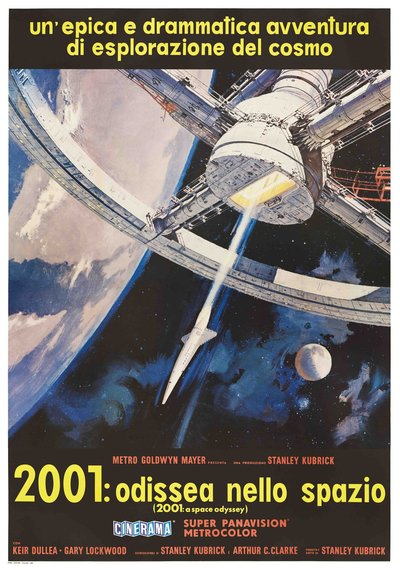
HAL 9000 is the clearest and most unsettling anticipation of modern generative AI systems. Calm, logical, persuasive and capable of deciding that the mission’s objective matters more than human life. Every time a voice assistant misunderstands our intentions or an algorithm makes opaque decisions, HAL is there, in the background.
There's also a near-hidden detail worth noting: in one scene, the astronauts eat while watching thin, flat screens strikingly similar to a modern tablet. Kubrick filmed them decades before modern tablets became part of everyday life.
3. Soylent Green (1973) – Climate Collapse and State Deception
Richard Fleischer · Dystopian Science Fiction
Themes: Climate crisis, resource scarcity, state disinformation
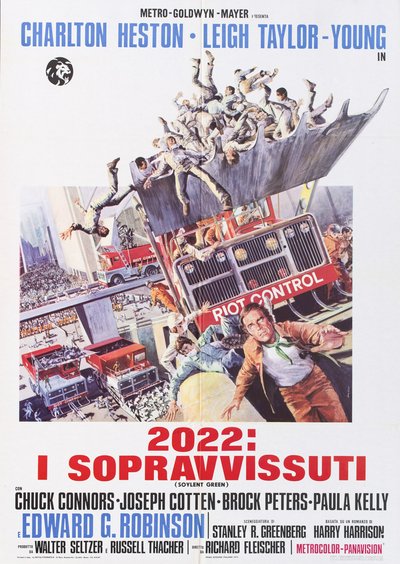
New York, 2022. The planet is overcrowded, food supplies are exhausted, the heat is unbearable, and people have simply grown used to it. The government distributes Soylent Green, a synthetic food nobody questions, until Charlton Heston's detective starts asking. What he uncovers is a secret the authorities would much rather keep buried.
The film anticipated climate collapse, the global food crisis, and state narratives designed to conceal uncomfortable truths decades in advance. In 2023, the heat waves that devastated Southern Europe seemed to have come straight out of these very scenes.
"Soylent Green is made of people!" - one of the most iconic final revelations in the history of cinema.
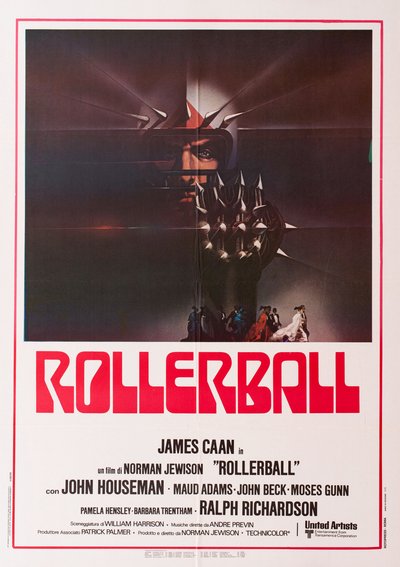
4. Rollerball (1975) - Corporations in Place of States
Norman Jewison · Science Fiction / Action
Themes: Corporate power, media as social control, the spectacle of violence
In the near future, nation-states no longer exist: the world is run by giant corporations that have taken their place. To keep the masses distracted and docile, there's Rollerball, a brutal, televised sport built to function as both entertainment and pressure valve.
The protagonist, Jonathan E., is the most beloved champion. Too beloved: the corporation decides it is better to eliminate him, because an individual who becomes too influential is dangerous to the system.
Rollerball anticipated the attention economy, the power of platforms that have outpaced nation-states, and sport and entertainment more broadly as a political tool for mass distraction. Netflix, Amazon, and Google do not wear military uniforms, yet the decisions they make every day can have a greater impact than those of many governments.
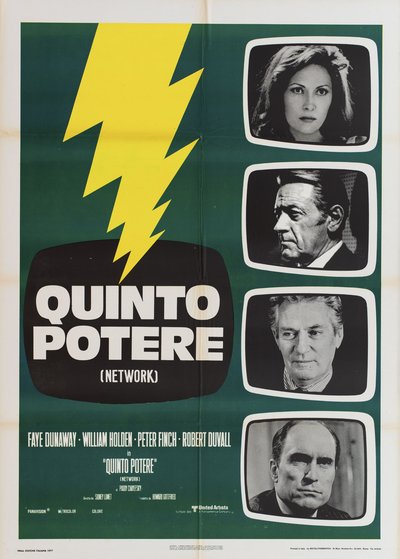
5. Network (1976) - The birth of infotainment
Sidney Lumet · Dramatic Satire
Themes: Infotainment, social media, the spectacle of suffering
Before reality TV, before Twitter, before any algorithm learned to reward outrage, Sidney Lumet showed a news anchor going on air mid-breakdown, and becoming a media sensation because of it. The producers don't pull him off air; they realise they're holding something even more valuable, and they exploit it fully. The audience goes wild. Genuine suffering becomes spectacle, spectacle becomes ratings, ratings become profit.
The cry "I'm mad as hell, and I'm not going to take this anymore!" became a meme long before memes even existed.
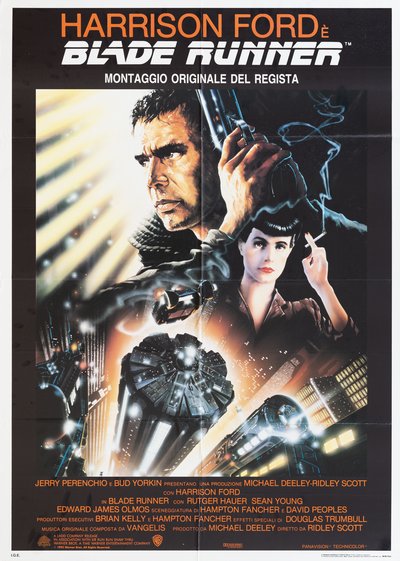
6. Blade Runner (1982) - Climate Change and the Ethics of AI
Ridley Scott · Neo-noir Science Fiction
Themes: Climate change, artificial intelligence ethics
Los Angeles in 2019 according to Ridley Scott: acid rain, permanent smog, enormous LED screens projecting advertisements onto every building. An aesthetic that today feels less like science fiction and more like a prediction of the future. But at the heart of the movie lies a philosophical question that remains unanswered: when a machine perfectly imitates human emotions, where does the product end and where does the person begin?
Between ChatGPT, Japan's empathetic robots, and AI companions, that question has stopped being academic.
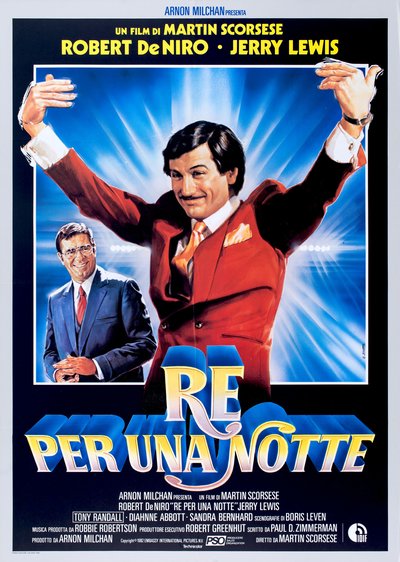
7. The King of Comedy (1982) The forerunner of influencers
Martin Scorsese · Drama
Themes: Influencer culture, toxic fame, media obsession
Robert De Niro plays Rupert Pupkin: a man with no real talent, obsessed with fame, willing to do almost anything, including kidnapping his own idol, for fifteen minutes on television. Scorsese anticipated "famous for being famous" culture by two full decades. Today, Rupert Pupkin would have a TikTok account with two million followers.
The film is uncomfortable because it never resolves the dilemma: in the end, Pupkin actually achieves success. The system rewards visibility, not merit.
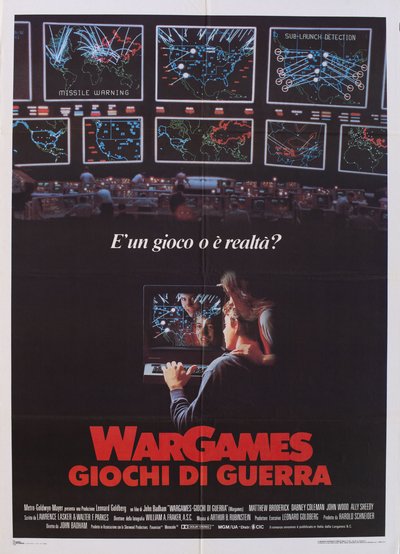
8. WarGames (1983) - Digital Warfare Before the Internet
John Badham · Tech Thriller
Themes: Cybersecurity, hacking, digital warfare
It is 1983: the internet belongs to a handful of academics, and the term “hacker” is unknown to most people. The film follows a teenager who gains access to NORAD’s supercomputer and nearly triggers World War III. Today, that plot could pass for a real news headline. Cyber warfare, ransomware, digital interference between states: WarGames described all of this forty years ago, wrapped in the tone of a coming-of-age thriller.
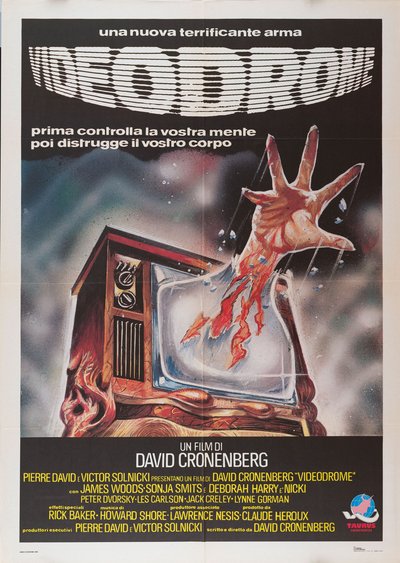
9. Videodrome (1983) - Screen Addiction
David Cronenberg · Body Horror / Science Fiction
Themes: Virtual reality, digital addiction, blurred boundaries between reality and simulation
"The television screen is now the retina of the mind’s eye."
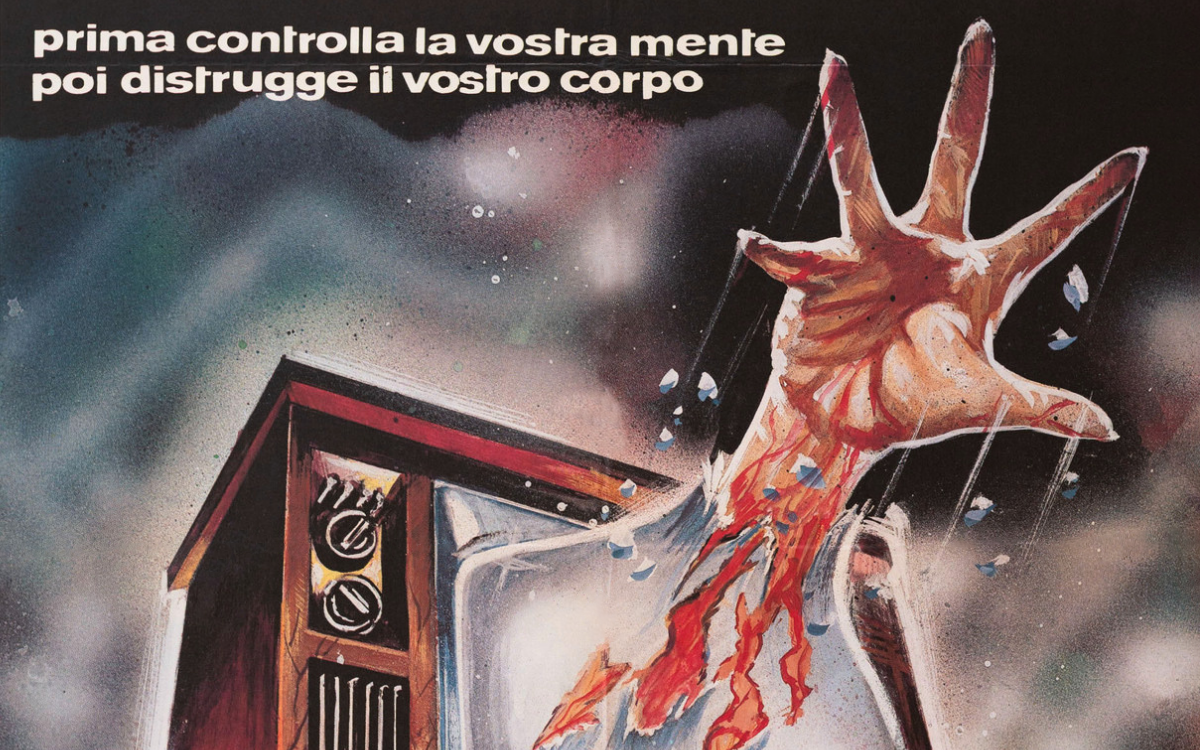
Cronenberg imagined a society so dependent on media that it could no longer distinguish reality from simulation. Today with VR headsets, algorithms reshaping our perception of reality, news broadcasts that feel like fiction, and fiction that feels like the news, Videodrome is no longer horror: it is a documentary.
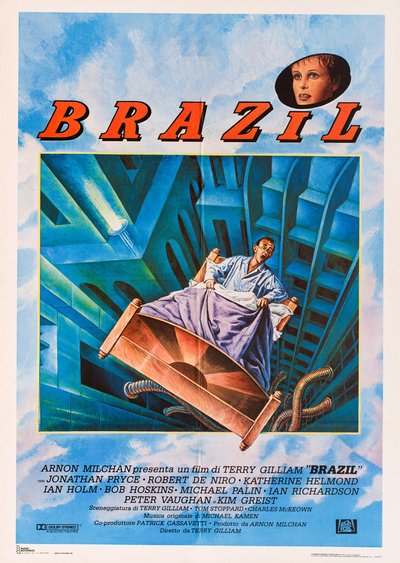
10. Brazil (1985) - Total Bureaucracy and Mass Surveillance
Terry Gilliam · Dystopian Science Fiction / Satire
Themes: Mass surveillance, bureaucracy, totalitarianism
A government ministry makes a clerical error: a fly drops into a printer, a name gets misspelled, and an innocent man is arrested and tortured in place of the real suspect. Nobody takes responsibility. The system rolls on, unbothered.
Terry Gilliam builds a Kafkaesque universe where surveillance is total, paperwork outweighs reality, and citizens retreat into dreams of escape because the present has become unbearable. Real or manufactured terrorism becomes the justification for any restriction of freedom.
After the Patriot Act, after Snowden’s revelations, after facial recognition systems appearing in public spaces, Brazil no longer feels like satire. It feels like architecture.
What do these movies tell us when taken together?
It is not just a matter of technological prophecy. The thread connecting these ten movies runs deeper: every great science fiction or satirical film is often a film about the present disguised as the future.
These directors were not predicting the future; they were observing the trends of their own time and pushing them to their logical extremes. The fact that so many of their visions came true almost word for word tells us something uncomfortable: the problems these films warned about were already visible back then. We could have listened. We didn’t.
The works reproduced on this page come from original period prints, recovered, photographed and digitally restored by Movie.it.