
Designing with the Art of Cinema
Restored film posters are becoming an increasingly important resource for interior designers, hospitality projects, and event styling, though good ones are far harder to find than the growing interest in them would suggest.
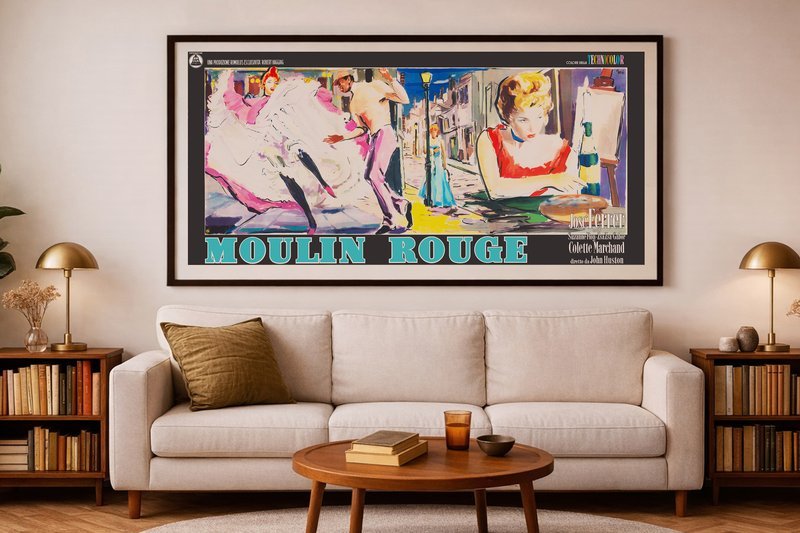
May 13, 2026
Restored, large-format film posters sit in an odd position within design work: almost anyone who sees one immediately understands the appeal, yet very few people know where to actually find one worth using. Most of what circulates online is a flat digital reproduction with no texture, undersized for a real wall, or printed at a resolution that falls apart the moment you stand close to it. Finding something with genuine texture, in a proper large format, at consistent quality, and with real choice of subject, is closer to commissioning bespoke art than to browsing a print shop.
What elevates this material is the calibre of the artists who painted it, particularly in Italy, where an entire generation of poster painters worked at a level closer to illustration and fine art than to advertising. That history is part of what a designer is bringing into a space: not a print, but a documented, restorable piece of visual culture.
A Material, Not Just a Motif
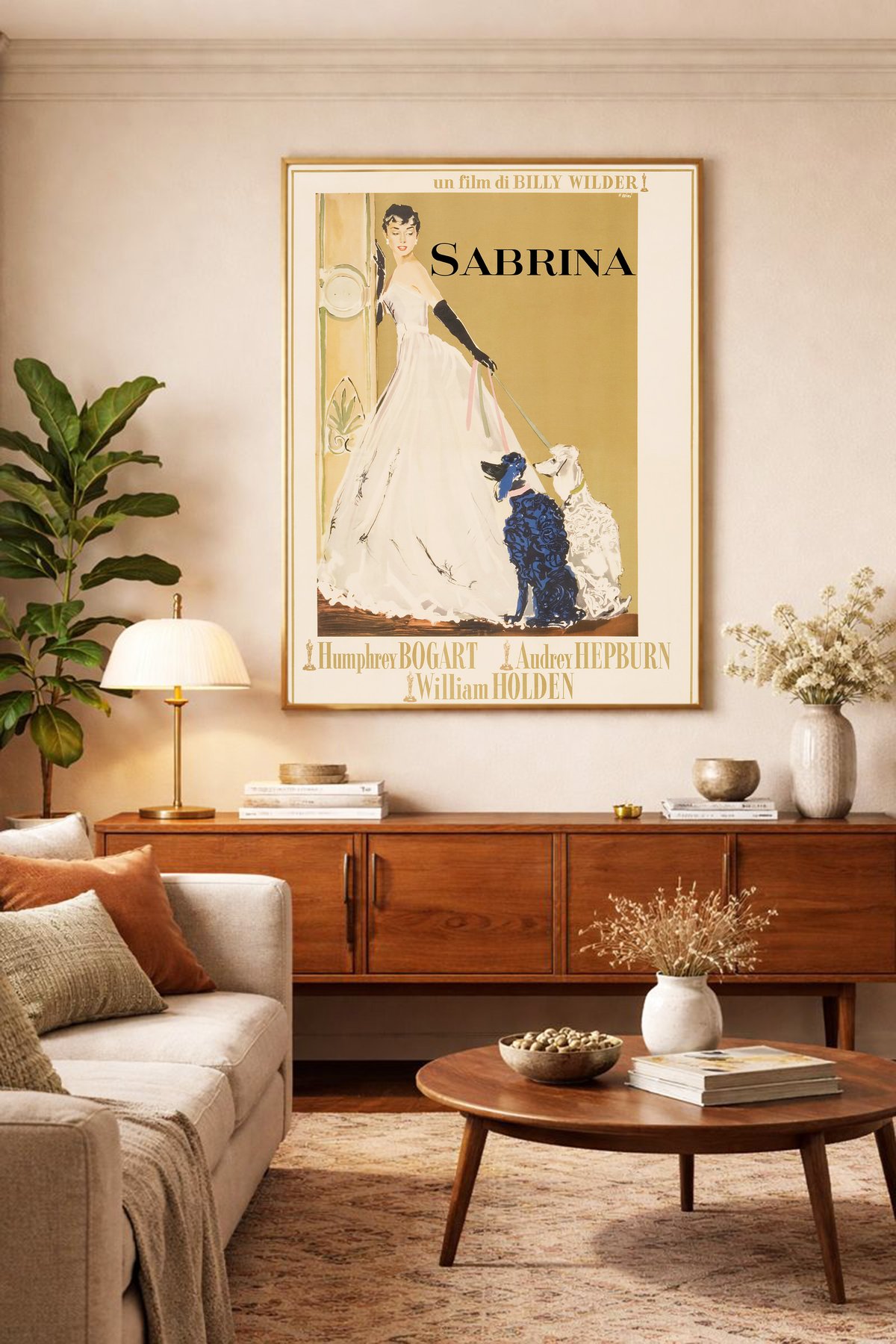
Each film carries its own visual signature: palette, composition and mood, all of which a good designer can read much as they would a fabric swatch or a paint sample. Think of the pastel restraint of a Wes Anderson production, the saturated reds of an Italian giallo, the chrome and neon of 1980s science fiction. A single restored poster can set the tone of an entire room before a single piece of furniture is chosen.
Scale and substrate matter as much as subject. A large-format canvas print in a vintage palette reads as a statement piece, closer to fine art than to décor. Smaller, tighter compositions, framed and grouped, tend to suit spaces that want energy and immediacy rather than gravitas.
The Work in Its Original Form
A film poster, as originally printed and distributed, carried far more than the artist's painting: distributor logos, credit blocks, review quotes, and tagline text were layered on afterward, around the image, for purely commercial purposes. For spaces built around cinema itself, cinema clubs, screening rooms, collectors' interiors, that full, historically accurate poster is usually the right choice: it is part of the object's authenticity, and cinema enthusiasts tend to want it intact.
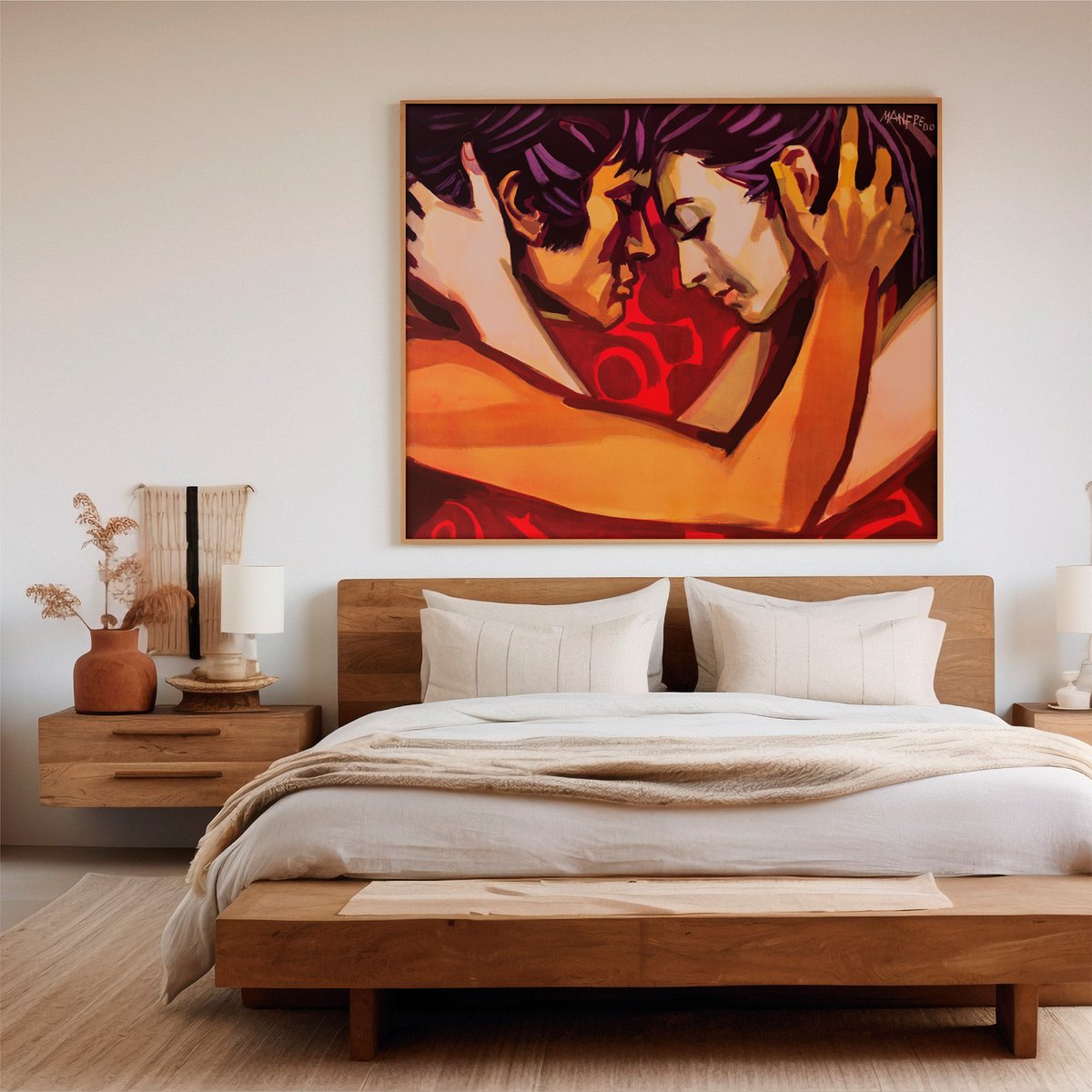
For design work that draws more on fine art than on cinema as a subject, the piece can also be supplied on request in the artist's original composition, returning the image as closely as possible to the composition originally conceived by the artist before later promotional text and branding were added. It is not a stripped-down version so much as a return to the work's original form, and it tends to suit interiors where the image needs to read as a painting first, and as a film poster second.
From Advertising to Art
It is worth remembering that film posters were never intended as decoration. They were commercial tools, made to sell tickets. Their status as a design material today rests entirely on the artistic skill that went into making them.
This is also why the category has expanded well beyond the poster itself. Lighting fixtures, illuminated signage, cinema seating furniture, and set-inspired accessories now sit alongside posters as part of the same design language, one that borrows directly from the aesthetics of film production and exhibition.
For Hospitality and Events
For hotels, restaurants, screening rooms, and private members' clubs, restored posters solve a real sourcing problem: imagery with genuine provenance and a story attached, available at the scale a hospitality project actually requires, which is precisely what is hardest to find elsewhere. The same applies to event design, where a themed installation, a premiere, an anniversary screening, or a brand activation built around a particular film era benefits from imagery that is authentic rather than reproduced from a low-resolution scan.
An archive of tens of thousands of digitised and restored film posters, lobby cards, and stills makes it possible to specify this kind of material at a professional level: custom sizing, trade quantities, the original composition on request, and consistent quality across an entire project, whether that project is a single room or an entire venue.
Cinema, in other words, is no longer something a space simply displays. Increasingly, it is something a space is built around.
The works reproduced on this page come from original period prints, recovered, photographed and digitally restored by Movie.it.