
Billy Wilder: Hollywood's Romantic Cynic
Edited by Paolo Zelati, Editorial Director
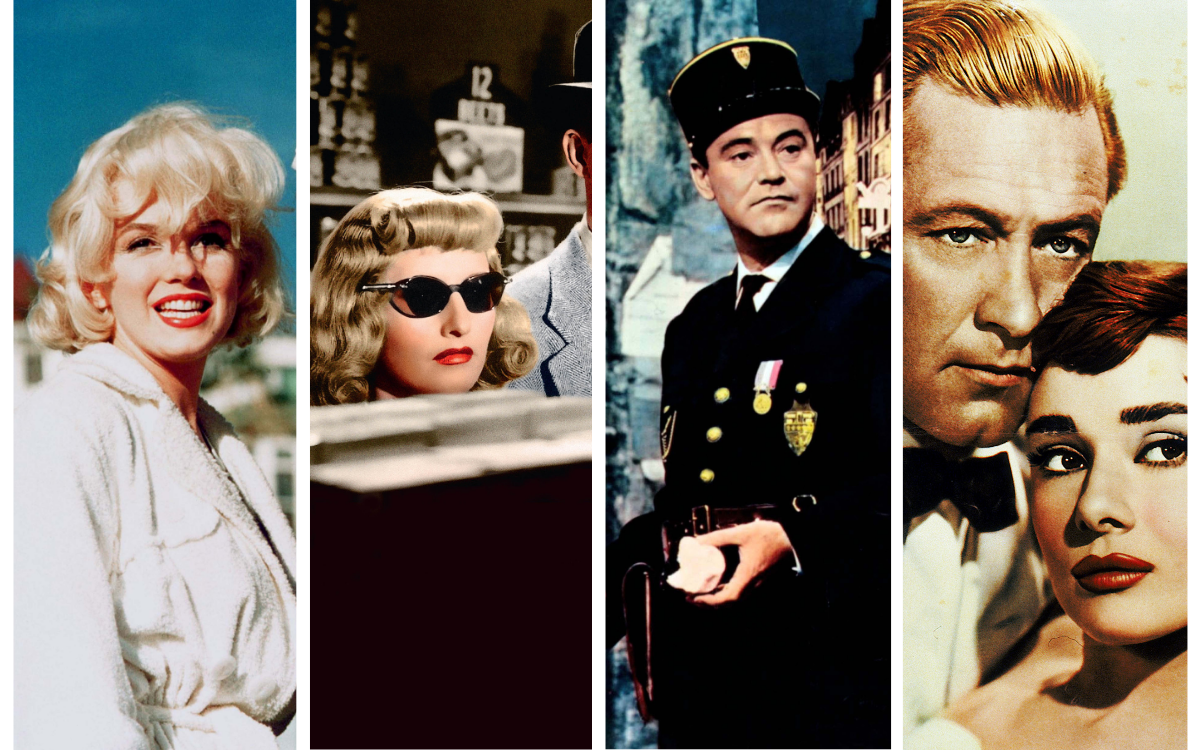
May 19, 2026
From European exile to Hollywood legend: a journey through the cinema of a master director who fused cynicism, wit, and profound human truth across unforgettable noir and timeless comedy.
Billy Wilder (1906–2002), born in Sucha, in what was then Austria-Hungary, and raised in cosmopolitan Vienna, lived the twentieth century at full intensity: exile, triumph, and an inexhaustible curiosity about human beings in all their contradictions. Before becoming a Hollywood legend, he worked as a journalist and screenwriter in Europe, sharpening an eye that was both critical and quietly amused. Fleeing Nazism, he settled in Hollywood, where he left a mark few directors have matched: his films hold irony and melancholy, lightness and depth, sarcasm and sentiment, in a balance where neither ever quite overpowers the other.
One detail says a great deal about the man: Wilder loved simple, faintly eccentric food, scrambled eggs with ketchup among his favourites, and would eat it often during script meetings, defusing tension with stories from his Viennese youth. That same instinct for observing life, holding lightness and bitterness together at once, runs through every one of his films. Every story moves with exact rhythm, letting drama and comedy coexist without ever grating against each other. Truffaut, a great admirer of Wilder's, praised precisely this: the ability to hold human depth and narrative brilliance in the same hand.
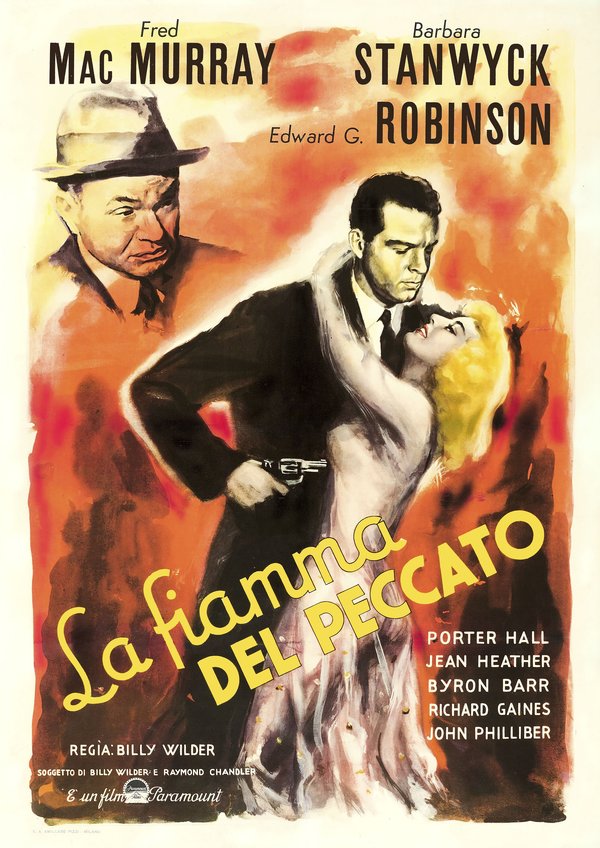
Double Indemnity (1944)
A masterclass in noir, in which Wilder tells a story of deceit and desire without a trace of sentimentality. Walter Neff, a methodical insurance man, and Phyllis Dietrichson, an irresistible femme fatale, conspire to murder for an insurance payout. Clipped dialogue and heavy silences turn every scene into a precise balance of tension and sarcasm. The poster hints at the story's lethal allure, but it is the dynamic between the two leads that lingers in the memory.
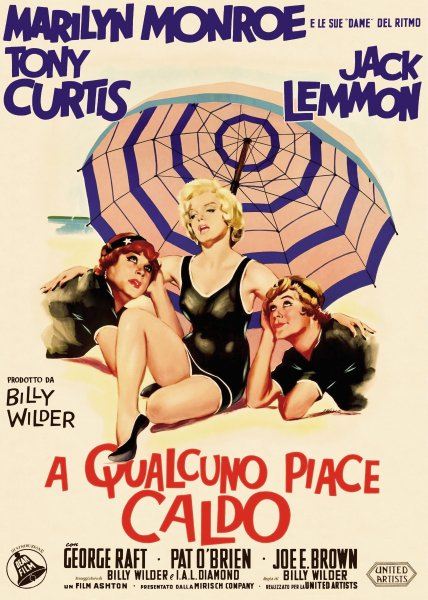
Some Like It Hot (1959)
Here Wilder shows his full genius for blending pure entertainment with social observation. Two musicians disguise themselves as women to join an all-female band, setting off a chain of gloriously absurd situations. Wilder plays with identity and desire, building a comedy elegant enough to still feel fresh today. The poster captures the film's lightness, but its real magic lives in its comic timing and the sheer intelligence of its dialogue.
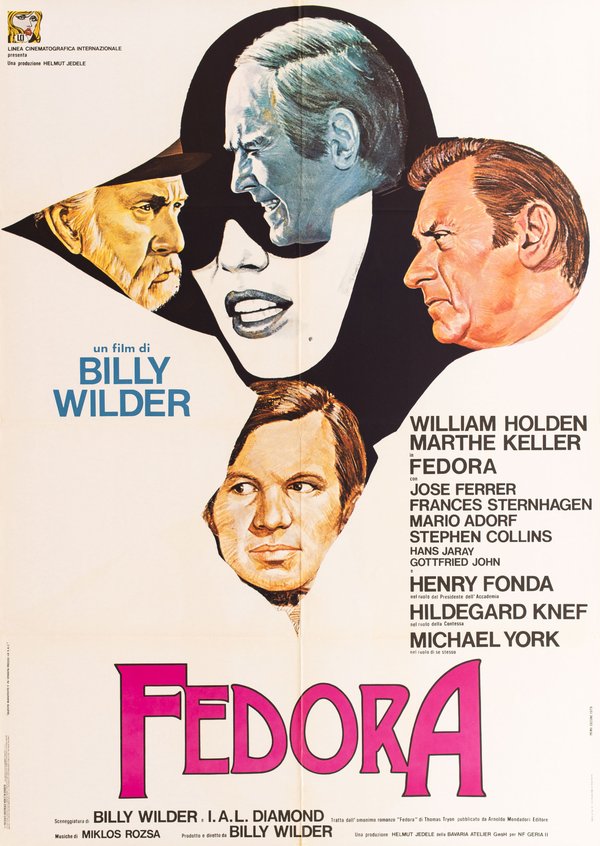
Fedora (1978)
A melancholy drama about fame and illusion. A Hollywood producer sets out to persuade a reclusive former star to return to the screen, only to uncover the price of celebrity and the deception behind appearances. Wilder tells it with theatrical delicacy, weaving nostalgia together with a subtle irony, and reveals the fragility of the human being hiding behind the mask of success. The poster only hints at the mystery at its centre; the film's real heart lies in restrained emotion and a melancholy poetry that runs through every scene.
Billy Wilder moved across genres without ever losing his voice: from the noir of Double Indemnity, to the sophisticated comedy of Some Like It Hot , to the wistful drama of Fedora. His life, marked by exile, tireless work, and a constant attentiveness to human behaviour, comes through in every frame. His films, and the posters that accompanied them, remain testimony to a cinema that was elegant, witty, and deeply felt, one capable of entertaining, moving, and provoking thought all at once.
Wilder was never chasing technical perfection alone, but human truth. And we, privileged viewers decades on, can still be moved by his characters, still ache over their impossible loves, and still marvel at how much an entire world can live inside a single frame.
The works reproduced on this page come from original period prints, recovered, photographed and digitally restored by Movie.it