
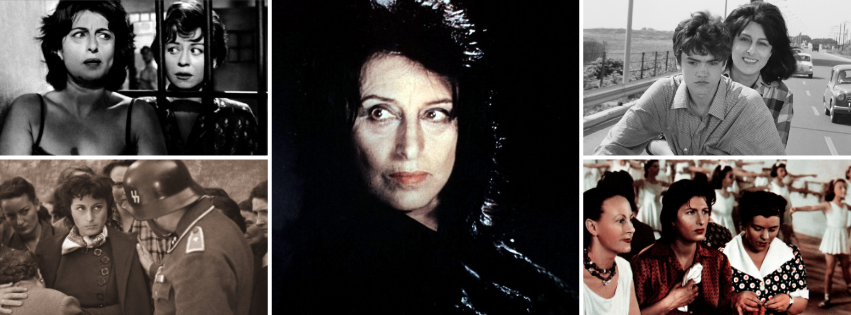
To tell the story of Anna Magnani is not so much to follow a chronology as to enter a magnetic field where biography and legend overlap to the point of becoming indistinguishable. She was born in Rome in 1908 to Marina Magnani, from Fano, and an unknown father, probably of Calabrian origin whom she would never know. Rather than a mere biographical detail, this absence already appears to be an original fissure, one of those cracks through which, over time, her entire on-screen truth would seep.
Her mother left early for Alexandria, Egypt, and the young girl remained in Rome, entrusted to an all-female family: her grandmother and aunts, a domestic constellation that taught her the tangible language of emotions. She studied, attended secondary school and played the piano; however, in 1926, when she enrolled at the Reale Scuola di recitazione Eleonora Duse, that her husky, unmistakable voice found its first platform to resonate. They called her 'Nannarella': a diminutive that already carries with it a destiny of closeness, almost of popular belonging.
She worked in Dario Niccodemi's theatre and then in variety shows with the De Rege brothers, where her performance became faster, more instinctive and less controlled. She shared the stage with figures such as Ave Ninchi and Gino Cervi, but she was already somewhere else: in a realm where the actress does not perform, but rather comes to life.
She entered the world of cinema almost by accident, with a small part in La cieca di Sorrento (1934), but it was a cinema that was still unable to accommodate her.
During the 'white telephone' era, she was forced into roles that didn't suit her, like borrowed clothes. She worked, she adapted, and she appeared in films that did not truly represent her. In the meantime, she married Goffredo Alessandrini, left him, and fell in love with Massimo Serato, with whom she had a son, Luca: an all-consuming, almost exclusive relationship, as if motherhood were her second act.
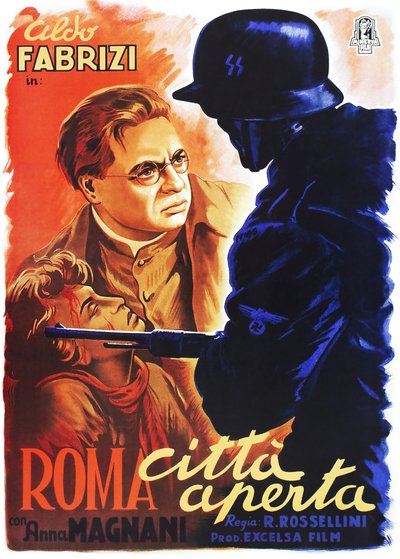
The turning point is not only artistic but almost ontological: Rome, Open City (1945) by Roberto Rossellini.
Here, Anna Magnani does not play Pina: she embodies her as if she were a collective memory taking shape. Rather than cinematic sequences, the chase, the gunshot and the fall are apparitions.
She became the face of Neorealism, but more importantly, the face of an Italian truth that refuses to be tamed.
She also had a romantic relationship with Rossellini, which was to end abruptly with the arrival of Ingrid Bergman: an episode that cinema would almost turn into a legend, as depicted in Francesco Patierno’s documentary ‘La guerra dei vulcani’.
In the years that followed, Magnani worked tirelessly, as if each film were a hand-to-hand struggle: from Luigi Zampa’s Angelina to Luchino Visconti’s Beautiful, in which she exposes the petty-bourgeois dream of success with a combination of ferocity and pity. Within her coexist the common woman and tragedy, comedy and heartbreak: a combination that cinema struggles to categorise.
Hollywood Beckons, but she Remains Irrevocably Roman.
In The Rose Tattoo (1955), directed by Daniel Mann, she won an Oscar: an almost paradoxical event, considering that she still spoke very little English and prepared her lines with Tennessee Williams’ help during the Atlantic crossing. This success did not change her: Magnani remained impervious to the rhetoric of stardom.
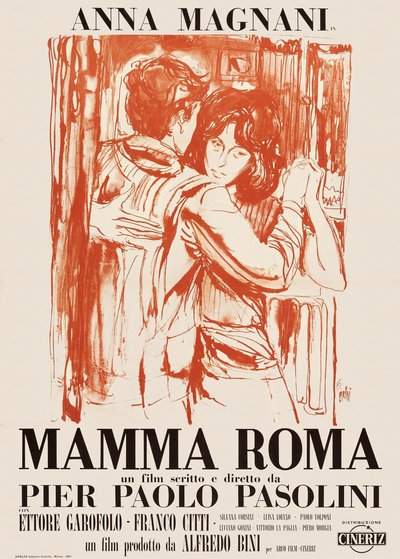
In the 1960s, she returned to work with intermittent intensity, as if by then she was choosing only roles that reflected her own character. She appeared alongside Totò in Risate di Gioia (1960) and, under the gaze of Pier Paolo Pasolini, became Mamma Roma (1962): a figure who seems to have emerged from a secular gospel, where the sacred and the debased coincide. Then, once again, theatre, like a necessary return.
And finally, television, with Alfredo Giannetti, and her final appearance in Federico Fellini’s Roma (1972), where she is no longer a character but a symbol: the city itself, taking on a voice and a face.
She died in 1973, in Rome, consumed by an illness that never had anything to do with her on-stage energy. At her side were her son Luca and Rossellini: as if, even in her final moments, her life were centred around those essential bonds.
Something remains of Anna Magnani that eludes criticism and history: her searing, almost scandalous quality of being genuine. She did not represent the people; rather, she exposed them, with all their contradictions.
Special thanks to Sebastiano Cannavò for his invaluable collaboration.
The works reproduced on this page come from the original prints of the period, recovered, photographed and digitally restored by Movie.it.